Strategic allocation, ESG and geopolitical risks (roundtable ‘Fiduciary Management in 2030’ – part 3)
In part 3 of the roundtable report on Fiduciary Management in 2030, participants explore how strategic asset allocation is changing under the influence of geopolitics, ESG, technology and the new pension system. From illiquidity and impact investing to AI and uncertainty: what do these trends mean for pension funds and the role of the fiduciary manager?
By Hans Amesz
This is part 3 of the report. You can read part 1 here and part 2 here.
|
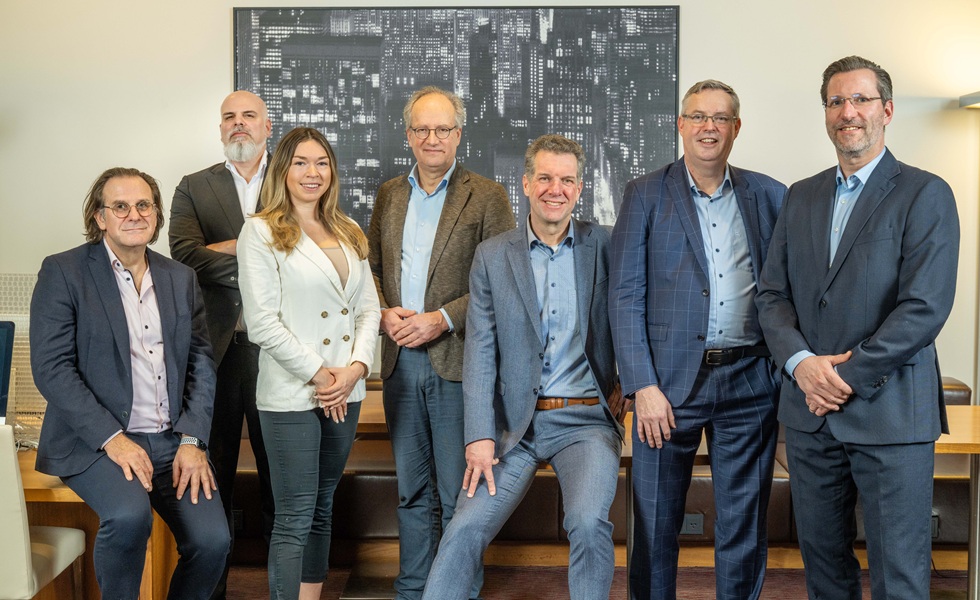
CHAIR: Jeroen van der Put, various pension funds PARTICIPANTS: Janwillem Engel, Montae & Partners Jasper Haak, AF Advisors Carl Kool, BlackRock Marit Kosmeijer, Sprenkels Daniël Rijs, DPS Marcel Roberts, SPMS Alfred Slager, Vrije Universiteit Amsterdam |
How will ESG and sustainable investing develop in the coming years?
Haak: ‘You are seeing a shift towards greater attention to ESG risk. Policy must be designed in such a way that these risks can be kept under control. Then sustainable policy can be sold effectively to participants.’
Rijs: ‘It is difficult to quantitatively attribute the effects of sustainable investment policy to policy choices or title selection. How much of your return is actually due to ESG choices, such as the impact of carbon reduction targets? In fact, sustainability policy is an integral part of your considerations: return, risk and costs.’
Roberts: ‘In theory, ESG investing costs money because you limit your investment universe. In practice, this can turn out differently, in the sense that you simply start impact investing, doing things that contribute positively to global development. I am concerned about the geopolitical situation, because we need to become energy independent and invest more in defence. This is actually at odds with what you would want as an ESG investor. The focus is shifting from very green to less green.’
Kool: ‘The ESG process, which must permeate the entire chain, is much more driven by data and research. This makes the risks more transparent. You can monitor more and better and ultimately also make the added value transparent. This is a very important trend.’
Kosmeijer: ‘I firmly believe in sustainable investing for the longer term in order to make the world a better place and generate financial returns. In the short term, it may be different. ESG is not just E, but also S and G. Investments now need to be made in security, defence and weapons in order to defend certain democratic values. That may not be very E, but it may well be S or G.’
Engel: ‘What was socially irresponsible until recently is slowly but surely becoming socially responsible. Europe needs to take more care of itself in areas such as energy and defence. That also offers opportunities.’
Is sustainable investing maturing, in the sense that it is becoming more realistic?
Haak: ‘It will take some time before ESG investing is truly mature. Exclusions alone are not enough. We have seen that there are longer periods in which sustainable investment choices have led to lower returns. Incidentally, much of the ESG data is still very immature.’
Roberts: ‘I have always wondered why we have identified ESG risk as a separate risk and do not consider it as a normal risk. As long as that remains the case, I don't think we are mature yet. There is a trend towards greater integration, though.’
What does all this mean for the role of a fiduciary manager in 2030?
Roberts: ‘I don't use my fiduciary manager as an ESG advisor, but I do use them for implementation. The fiduciary manager needs to know what's available on the market and how we could implement it.’
Kosmeijer: ‘Sustainable investing remains a separate way of investing. You want to achieve something different or more than just financial returns.’
Kool: ‘Expanding the importance of impact investments strengthens the involvement of participants and contributes to a close relationship between the pension fund and its participants. The fiduciary plays a role throughout the entire chain.’
Kosmeijer: ‘It's great if you can engage in impact investing within your own sphere of influence. You do indeed create a bond with your participants, and that doesn't have to stand in the way of returns. That way, you kill two birds with one stone.’
How can pension funds prepare for increasing geopolitical uncertainty?
Roberts: ‘I think that sustainable investing, at least in Europe, will be put on the back burner or postponed for the time being. After all, we have other problems to deal with at the moment.’
Kosmeijer: ‘My feeling is that you need to be a lot more vigilant about concentrations of investments. The concentration around the US and tech didn't happen overnight; it's been there for a long time.’
Kool: ‘Geopolitical fragmentation has a major impact. For example, we have been looking closely at US exposure over the past year, including with clients. It's not as if everyone is suddenly pulling out of US investments, because no matter how you look at it, the US is an enormous capital market, accounting for 70% of the MSCI World and a large part of the private markets. It's not that easy to suddenly take drastic action there.’
Roberts: ‘Sentiment will play a greater role in American investments. Feelings are generally a poor guide, but our board members and contacts with many American parties are expressing concerns, more so than six months ago. If, for example, the midterms were not to go ahead in November, it would be a very strange situation. As long as the rule of law is upheld, nothing will happen. If laws are flouted, we will have a real problem. Political uncertainty in America is quite high, and that is a huge risk.’
Slager: ‘I don't know if there is increasing geopolitical uncertainty. We tend to exaggerate things that are just happening. As long as it didn't bother us too much, most funds actually pushed it into the background a bit, because it raises difficult questions. Geopolitical uncertainty is much more about making decisions under uncertainty. We work out scenarios, but many funds and fiduciaries don't really know what to do with that uncertainty and those scenarios in their decision-making and portfolio construction. Thinking that through and organising it is much more important than looking at US equities with concern and not doing much about it.’
How will emerging technologies such as AI and big data change the way we organise and execute pension investments?
Kool: ‘We believe that a revolution is truly underway, one that will structurally increase productivity. And enormous opportunities are also being created on the investment side. Huge investments are needed for the digital infrastructure and the energy associated with it. You have much more and faster access to real-time data, which you can use to significantly improve the quality of ESG monitoring and services. That translates into a higher quality of service for pension funds.’
Rijs: ‘I see the revolutionary development mainly in the management of mandates, the selection of titles, and the gathering of information from analyst reports and annual reports. That will happen much faster and more efficiently.’
What are the biggest challenges for pension funds' investment policy in the transition?
Kosmeijer: ‘The biggest challenge arises when something dramatic happens in the market. That can be dramatically negative or dramatically positive. Funds that have taken far too little risk will not benefit from this, or vice versa.’
Roberts: ‘There are many more rules, legal frameworks, risk preference surveys and lifecycles. The scope for action has become smaller if, for example, you find that a fund that has transitioned took too little risk in the first few months. Those kinds of teething problems need to be ironed out. The first phase of the transition was unexpectedly favourably influenced by market developments. This system will only really be tested in the event of a major recession, when something completely unexpected and severe happens. Then the solidarity reserve will run into problems.’
Rijs: ‘The fact that participants may be exposed to too much or too little risk during and around the transition to the new pension system is partly inherent to the transition itself. In the new system, a conscious decision has been made to place those risks – plus and minus – more with the participants, whereas in the FTK they were, as it were, tucked away under the blanket of the coverage ratio and spread out through the creation of buffers.’
|
SUMMARY Fiduciary management boils down to asset management and, to a greater or lesser extent, advice, implementation and strategic advice. There are many different flavours. Which fiduciary models are established depends in part on what the pension fund wants, but also in part on what the fiduciary manager offers. The global trend is undeniably towards increased outsourcing and fiduciary management. This is mainly due to increasing complexity. To remain successful as a fiduciary manager, you have to keep innovating and investing. In the new system, where supervisory rules relating to the required capital are being relaxed, there will be more scope for more complex and illiquid products. There will be a more aggressive investment policy, because you will be able to take more risks in the future. The importance of expanding impact investments strengthens the involvement of participants and contributes to a close relationship between pension funds and participants. The fiduciary plays a role throughout the entire chain. |
|
Jeroen van der Put Jeroen van der Put is a director at various pension funds, including Centraal Beheer APF. He is also chairman of the board of the VBDO, advisor to investment committees and advisor to the Pension Funds Code Monitoring Committee. Previously, he held various management and supervisory roles at pension funds, healthcare institutions and investment organisations, and was chairman of the risk management committee of the Pension Federation. |
|
Janwillem Engel Janwillem Engel has been Lead Investment Consultant at Montae & Partners since 2016, where his responsibilities include assisting pension funds in the selection and evaluation of fiduciary managers, keeping track of developments in the fiduciary market, and maintaining contacts with providers of these services. Engel is a qualified industrial engineer and previously worked for 15 years as a Strategic Advisor at Cardano. |
|
Jasper Haak Jasper Haak is Managing Partner at AF Advisors. After holding management positions at Robeco, he has been advising senior management in the financial sector since 2008. He combines strategic insight with in-depth knowledge of financial markets. Haak holds an MBA from London Business School, is a CAIA charterholder and a certified Financial Risk Manager. |
|
Carl Kool Carl Kool is Head of Fiduciary Management Netherlands at BlackRock, where he has been working since 2011. Prior to that, he was Head of Strategy & Research at Doctors Pension Funds Services (DPFS). He previously worked at ING and Robeco/IRIS, among others. Kool graduated in Economics from Erasmus University Rotterdam and is a CFA charterholder. |
|
Marit Kosmeijer Marit Kosmeijer is Director of Investments and Actuarial Services at Sprenkels. She first joined Sprenkels in 2018 and, after spending several years in the private equity sector, returned in 2023. Kosmeijer is an advisory actuary, investment advisor and pension transition advisor. She is an Actuary AG (AAG) and studied Financial Econometrics at VU University Amsterdam. |

|
Daniël Rijs Daniël Rijs is Senior Investment Manager at pension administrator DPS. Since 2012, he has been jointly responsible for strategic policy advice on investment policy. He has nearly 30 years of experience in institutional portfolio management and fiduciary management. Rijs studied Econometrics in Tilburg and joined DPS in 1997 as Fixed Income Portfolio Manager and ALM Advisor. |
|
Marcel Roberts Marcel Roberts is an experienced Chief Investment Officer with more than 25 years of experience in institutional asset management. He has held and continues to hold various roles as CIO, chairman and member of investment and review committees at pension funds. His expertise lies in strategic investment policy, asset allocation, risk management and governance within complex pension organisations. |
|
Alfred Slager Alfred Slager is Professor of Institutional Investments at VU University Amsterdam and a non-executive director at pension fund ABP. He is also a member of various investment (advisory) committees. In previous roles, he was a director, investment strategist and asset manager. His publications cover topics such as investment governance, long-term investing and sustainability. |
Read the original report in Financial Investigator magazine