Rick van der Ploeg: Climate transition still being undermined by misguided incentives
This article was originally written in Dutch. This is an English translation.
Rick van der Ploeg, an economist and professor at the University of Oxford, argues that there are still many blind spots in global climate policy. In conversation with Financial Investigator, he explains why the true costs of CO₂ are many times higher than politics and the market suggest, and why, without strong incentives and social compensation, the transition risks stalling.
By Harry Geels
You argue that the optimal price of CO₂ per tonne is (or should be) much higher than the market price. How is that possible, and what are the consequences?
‘A great deal of research has been carried out into what the price of CO₂ should be. Put simply, this involves calculating the damage caused by one tonne of CO₂ emissions, both to public health and through global warming, which in turn leads to natural disasters and damage to sectors such as agriculture. Nobel laureate William Nordhaus has carried out a great deal of pioneering research and developed models to calculate the Social Cost of Carbon (SCC), the monetary value of the damage caused by one additional tonne of CO₂. Initially, in 2017, he arrived at a figure of around $30 per tonne of CO₂. The latest estimates by Adrien Bilal & Diego Känzi came to $1,200, much higher than the current market price [mid-March 2026, ed.] of around $70. In doing so, they have factored in insights regarding a greater likelihood of climate disasters and even ‘climate tipping points’.
One of the reasons why the market price is too low is the number of allowances: the EU ETS emission allowances (EUAs). If we reduce those, the market price will rise. Gradually, we are beginning to understand better just how high the costs of CO₂ emissions really are.’
You strongly advocate a climate dividend, whereby the proceeds from CO₂ levies are returned to citizens, particularly to protect those on low incomes. Is that politically feasible?
‘A climate dividend, derived from CO₂ pricing, should primarily be given to those on the lowest incomes, as they contribute a relatively higher proportion to CO₂ taxes. They do not have the money to buy a heat pump or an expensive electric car. CO₂ taxes are politically doomed to fail if we do not compensate citizens, particularly those on lower incomes, for them. We see this in practice: they turn against climate transition plans by, for example, voting for parties that do not support the transition. My rule of thumb is to give every citizen a fixed amount, for example €250 per month. We use the rest of the CO₂ taxes to make the tax system more efficient.
CO₂ taxes are politically doomed to fail if we do not compensate citizens, especially those on lower incomes, for them.
Another issue is that import companies purchasing goods from outside the EU must, as of 1 January this year, buy certificates via the Carbon Border Adjustment Mechanism (CBAM), linked to the EU ETS price. This leads to reduced competitiveness for companies from, for example, emerging markets.
That is why a climate dividend is actually needed for these kinds of companies too, so that they can produce more sustainably. We could view this as a new form of development aid, but one specifically aimed at making the world as a whole more sustainable.’
You point out that major polluters are often exempt from CO₂ taxes, which you include in the figure of over €40 billion in ‘brown subsidies’. What should we do?
‘The IMF once calculated that around 7% of global GDP consists of subsidies to polluting companies, and for the Netherlands these are estimated at €40 billion. This also includes things we do not immediately recognise as subsidies. If, for example, steel companies do not have to pay for CO2 emission allowances, that is effectively a subsidy.
There are plans to give Tata Steel billions to make their steel production more sustainable. Should we really be investing in old industries? I was also one of the signatories of the letter to the government urging them not to give a subsidy to Tata Steel. Incidentally, there are steel companies within the EU that can produce steel more energy-efficiently. From an EU perspective, we do not need Tata Steel in the Netherlands. In my view, we would be better off investing in new, sustainable technology. And we need to expand the scope of companies required to pay for CO₂ emission allowances. AI companies and AI software, for example, consume enormous amounts of energy. Every AI user request should therefore be priced accordingly.’
How, then, do you explain the popularity of green subsidies versus the unpopularity of CO₂ taxes?
‘It is remarkable that a liberal party like the VVD is keen to grant subsidies. They distort the free market. If externalities are not properly priced in, green companies become less attractive to investors. In other words, if polluting companies pay more environmental taxes, they become less attractive to investors compared to green companies. The government then compensates for this by providing subsidies to green companies. The government ends up paying for the climate transition instead of the polluting companies. That is completely bonkers.
The VVD is not a liberal party that stands up for consumers, but a conservative party that primarily supports big business – companies that often use their international market power as a means of exerting pressure. There are five major companies in the Netherlands that are responsible for the lion’s share of CO₂ emissions and that know exactly how to find their way to The Hague. Environmental policy feels like a driver who is accelerating and braking at the same time.’
Do you see the CO₂ adjustment at the European border via the CBAM as one of the most effective tools against carbon leakage? And what does this mean for international trade?
‘A major achievement is that CBAM was established through the European Parliament. This would never have succeeded if we had left it up to the EU countries themselves. The system has now been running on a trial basis for a number of years. Its ultimate success will depend on the reliability of the calculations of CO₂ emissions from imported products. CBAM is intended to create a level playing field between EU companies and companies from the rest of the world. It will also mean that companies currently exempt from paying for CO₂ emissions, such as cement manufacturers, will now have to do so, because foreign competitors will be doing the same.
On balance, this should work out positively for green companies. If there are more polluting companies outside the EU, their trade could be affected. We can counter this by making green technologies available to them. This does, however, require cooperation between different ministries, such as the Ministry of Economic Affairs and the Ministry of Development Cooperation. But unfortunately, that is not happening. Ministries are too often preoccupied with their own affairs. Long-term visions are no longer being developed. Worse still: developing countries are increasingly being viewed as colonies, particularly by the US. And Trump has become a veritable Leopold II.’
Are many countries that possess the raw materials needed for the climate transition not at risk of contracting the ‘Dutch Disease’?
‘Yes, just as we did back in the 1960s and 1970s, those countries run the risk of squandering the proceeds from raw material sales. It is likely to get even worse in various countries, particularly where corruption is rife. I recently wrote an article on this for the Oxford Review for Economic Policy. The main theme: there is a Dutch Disease in Disguise. Geopolitical relations also play a role. We see that countries such as China and the US are trying to gain access to essential minerals. It is more difficult for Europe to intervene because Europeans are seen by developing countries as the former colonisers.
If polluting companies pay higher environmental taxes, they become less attractive to investors compared to green companies
The solution is to set up investment funds, as Norway has done, on the understanding that these funds also think outside the box with their investments. Investing in, for example, education for women yields a higher return in various African countries than investing in US Treasuries. Suriname is an interesting case: a mineral-rich country, but the focus will likely be on the easily extractable oil just off the coast. And I fear that, due to corruption, the population will benefit too little. If Suriname manages it efficiently, every Surinamese could be a millionaire, just like in Norway.
It is not all going wrong, however. A positive example is Botswana. If there are not too many tribes and there is freedom of the press, the distribution of wealth is easier. The best forms of development aid are investments in education and independent media. But unfortunately there are also negative examples. In Congo, for example, two-thirds of the mines are illegal. They are being plundered in a despicable manner by gangs. The political question is whether we want to purchase raw materials from such countries, a question that is unfortunately being sidestepped.’
You argue that climate-related disasters lead to lower risk-free rates and higher risk premiums. How can investors structurally factor this into asset allocation and risk-taking?
‘Companies in polluting industries, particularly the fossil fuel sector, have a “carbon premium”. They must offer higher returns (i.e. higher risk premiums) because they are viewed as risky, certainly by institutional investors. As climate issues become increasingly acute, that premium will rise. Logically, they are also becoming riskier. They could suddenly become ‘stranded assets’. It’s a bit like ‘the band played on, until the Titanic sank’. It’s better to carry out a dynamic optimisation, whereby you completely restructure the portfolio to consist entirely of zero-polluting companies by, say, 2050. Not too quickly, because then you miss out on returns, but not too slowly either, because then there are too many risks.’
You have been active in politics. What ambitions do you still have?
‘I have been active in politics as a Member of the House of Representatives and State Secretary at the Ministry of Education, Culture and Science, and have also worked for various organisations. I learnt an awful lot from that, particularly the lesson in humility: you can have the arguments on your side, yet still not be proved right. Or vice versa: with the wrong arguments, you can be proved right. Words are important. If I were to say that I want more competition in public transport, there would immediately be a lot of resistance. But if you say that people need more choice in transport, you get a round of applause.
You can have the arguments on your side, but still not be proved right. Words are important.
I am no longer politically active, although I am still a member of GroenLinks-PvdA, with great confidence in the merger. Because I live in London and more and more politicians from the past are stepping down, I am becoming increasingly distanced from it all. That’s fine by me. I am thoroughly enjoying myself in research and education, and as an advisor to, for example, the IMF, the World Bank and various developing countries.’
|
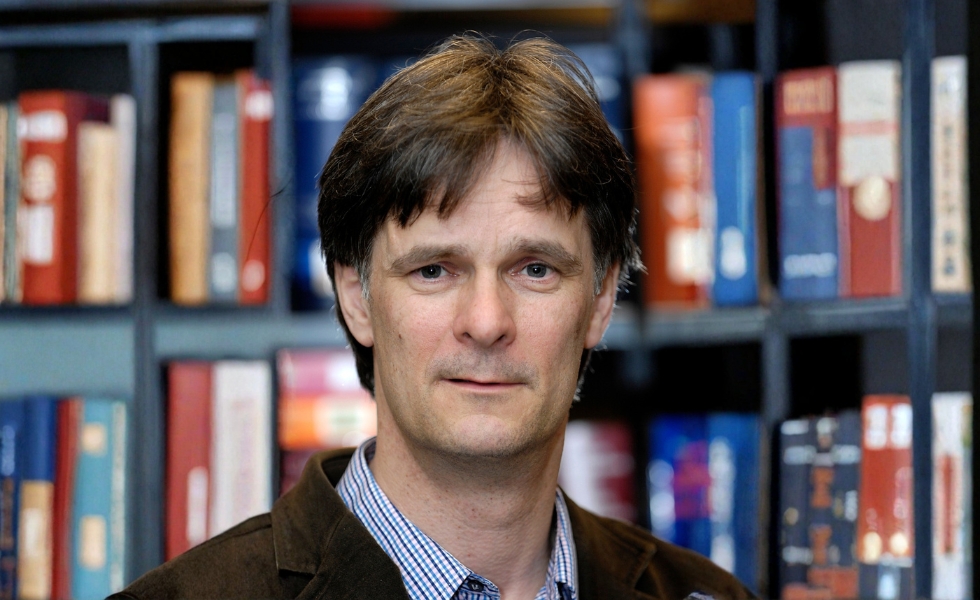
Rick van der Ploeg Rick van der Ploeg (1956) is a University Professor at the University of Amsterdam (UvA) and Professor of Economics at the University of Oxford, where he is also Research Director of OXCARRE. He previously worked at the London School of Economics, the European University Institute, VU University Amsterdam, Tilburg University and as a Visiting Professor in Utrecht. Van der Ploeg obtained his PhD in Engineering at Cambridge and later specialised in Economics. He has published extensively in leading journals. In addition, he was a Member of Parliament for the PvdA and State Secretary for Culture and Media in the Kok II cabinet. |
Read the full report in Financial Investigator magazine