IFM Investors: Infrastructure is tangible, essential and directly linked to the real economy
This interview was originally written in Dutch. This is an English translation.
Institutional investors are showing increasing interest in infrastructure. This is not only due to stable cash flows and protection against inflation, but also to the enormous investment challenge facing the world.
By Michiel Pekelharing
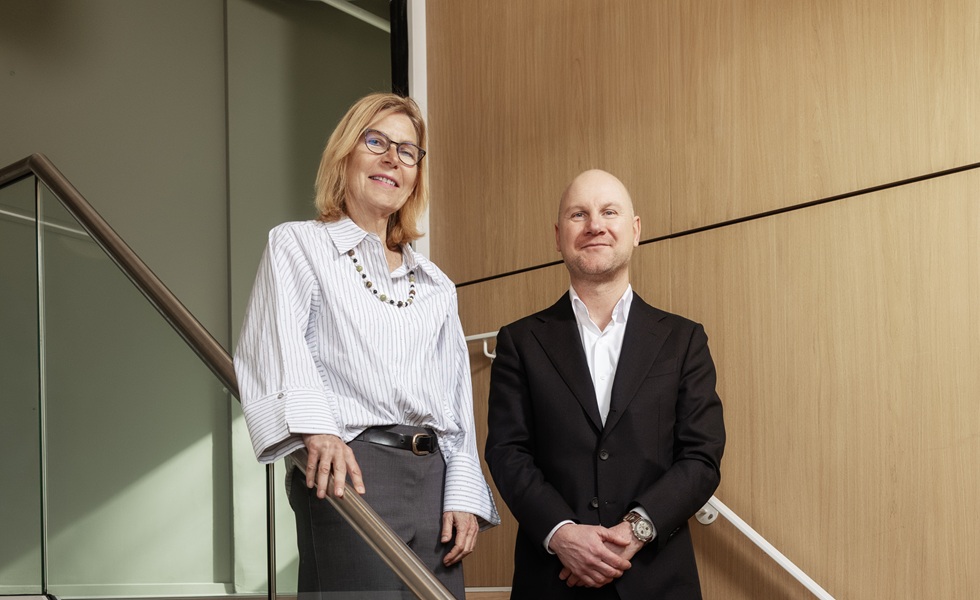
According to recent estimates by the consultancy firm McKinsey, global infrastructure needs are set to reach around $106 trillion by 2040. For pension funds and other long-term investors, this presents both a challenge and an opportunity. Else Bos, Non-Executive Director at IFM Investors, and Donné Hendrick, Manager of Global Client Solutions at IFM Investors Benelux, discuss the role of infrastructure in portfolios, developments in the Dutch market, and the way in which traditional infrastructure is becoming increasingly intertwined with new infrastructure, such as data centres and digital networks, and the energy transition.
IFM was founded in 1990 by a group of Australian pension funds. How does that origin influence the investment philosophy and long-term strategy?
Bos: ‘Those origins actually determine everything. IFM was indeed established thirty years ago by Australian pension funds, the so-called superannuation funds. At the time, they saw that infrastructure was being privatised and realised that this offered a unique opportunity to make an impact by investing directly in the real economy. Their long-term focus is truly in the DNA of our organisation. Our mission is to protect and grow the pension savings of working people. That may sound simple, but it means constantly looking at things from the participant’s perspective. It’s not just about returns, but also about stability, robustness and social relevance. Infrastructure fits in well with that. It concerns essential services – energy, transport, digital networks – that a society needs to function. By investing in these, you build stable cash flows for investors and economic infrastructure that people use every day. That intrinsic connection with the participant and the real economy is a very important starting point for us.’
Hendrick: ‘Our shareholders are themselves investors in our funds. This ensures that our interests are aligned. The model originated in Australia, but it actually works everywhere. Pension funds and insurers worldwide face the same challenge: they must achieve real returns for their members’ pensions, which are often not paid out for several decades. Infrastructure can play a key role in this, as many projects have long-term contracts and revenues are often linked to inflation. This makes it a natural fit with pension liabilities. Another excellent match is the way in which infrastructure investments enable investors to fulfil their sustainability ambitions. Essential services such as renewable energy, water, mobility and digital connectivity form the basis for economic and social development. At the same time, they create secure, high-quality jobs and training opportunities, with a strong focus on occupational safety and good working conditions taking on added significance.’
How long have you been active in the Netherlands and why?
Hendrick: ‘The Netherlands is an important market for us. We have been active here since 2014 and now have more than ten clients. These are mainly pension funds, but also insurers and family offices. Since 2021, we have also had an office in Amsterdam, giving us a genuine local presence.
Dutch investors, particularly pension funds and insurers, set high standards for reporting, governance and transparency. In addition, they often have a strong focus on sustainability and risk management. So you need to have a good understanding of how the regulations work and what information clients require. Dutch investors are also among the pioneers in the field of private markets. Many funds already have relatively large allocations to private equity and real estate, and are now looking increasingly to infrastructure as a complementary building block. This is leading to an increasingly mature dialogue about how infrastructure fits into a portfolio. For IFM, the Netherlands is therefore a truly important market, and we are very proud to have been named Infrastructure Manager of the Year at the Dutch Pension Awards 2026. ’
Bos: ‘What strikes me in the Netherlands is that pension funds are traditionally very internationally oriented. They build their portfolios globally, rather than having a strong domestic focus. You see that reflected in infrastructure too. At the same time, governments naturally like to see whether institutional investors can contribute to the financing of projects in their own country. That discussion is also taking place, but Dutch funds primarily want well-diversified portfolios. That means a global approach is often more logical than a purely national focus.’
IFM initially focused on traditional ‘old’ infrastructure. To what extent does that still apply?
Hendrick: ‘By traditional “old” infrastructure, we mean assets that are essential to the functioning of an economy and which often have a long lifespan. Think of ports, airports, motorways, energy and electricity networks. These are facilities that are used on a daily basis and for which demand is relatively stable. At the same time, we see that infrastructure is changing significantly. Alongside the traditional sectors, digital infrastructure and energy infrastructure have become increasingly important. Data centres, fibre-optic networks, green energy generation and energy storage, for example, are crucial for a digital economy and for the energy transition. What is interesting is that this new and old infrastructure are becoming increasingly intertwined. Take data centres. They require enormous amounts of energy and cooling. This, in turn, creates a strong link with energy and water infrastructure. So you can see that the various components of infrastructure are increasingly becoming part of a single integrated system.’
Bos: ‘From an investment perspective, this means you’re looking at different returns. A toll road has different risks and revenue streams than a data centre or an electricity network. By diversifying across sectors, you can build a more robust infrastructure portfolio. Moreover, different risks come into play in each sector. With a port, for example, you look at economic activity and trade flows. In digital infrastructure, technological developments play a greater role, whilst in the energy sector, regulation and energy markets carry more weight. That diversity makes the asset class interesting, because you can combine different economic dynamics within a single asset class.’
To what extent is there an investment gap in infrastructure?
Hendrick: ‘If you look at the figures, the investment requirement is enormous. According to estimates, more than $100 trillion needs to be invested in infrastructure worldwide over the coming decades. Governments simply cannot finance that on their own. Historically, infrastructure was largely funded by the public sector, certainly in countries such as the Netherlands, Germany and the Scandinavian countries. In the Netherlands, the five largest pension funds even sent a letter to the government in 2024 asking it to make it easier to invest in infrastructure alongside the government. In other countries, this trend has been underway for some time. Australia is leading the way in this regard. France, the US and the UK, among others, are also well on their way in this respect. In many Western countries, bridges, roads and electricity networks date back to the 1960s and 1970s. These need to be modernised. At the same time, there is a huge wave of investment on top of this due to digitalisation and the energy transition.’
Bos: ‘For investors, this means that many opportunities are emerging on a structural basis. As a result, infrastructure is increasingly becoming a mainstream asset class within institutional portfolios. Whereas it used to be a niche investment, we are now seeing more and more pension funds including a strategic allocation to infrastructure. This is due to the attractive combination of stable income, diversification and inflation protection. In addition, impact investing is playing an increasingly significant role. Pension funds continue to strive for the highest possible pension, but also want to help ensure that this is paid out in a liveable world. In the infrastructure sector, it is possible to measure many things very concretely, such as the amount of green energy generated or the number of people who gain a good, secure job thanks to a project. If a pension fund has specific targets based on the SDGs, progress towards these can be measured relatively easily. In this way, financial and sustainable returns go hand in hand.’
What are the arguments in favour of a global approach rather than a strong domestic focus?
Bos: ‘One of the main reasons is diversification. Infrastructure projects are closely linked to the economic and regulatory context of a country or region. By investing globally, you can spread risks across different economies, sectors and regulatory frameworks. Furthermore, investment opportunities are simply not evenly distributed across the world. In Asia, for example, a great deal of new infrastructure is needed due to rapid economic growth and urbanisation. In Europe and North America, the emphasis is more on modernising and making existing infrastructure more sustainable. By taking a global view, you can therefore better capitalise on where the opportunities lie at any given time.’
Hendrick: ‘On top of that, there are relatively fewer investment opportunities in Northern Europe, as much is publicly funded. Local expertise is crucial in this regard. Infrastructure is not an asset class in which you can invest remotely without understanding the local context. You need to know how regulations work, how concession structures are organised and how to collaborate with governments. That is why we have teams in different regions. They know the local market and can identify opportunities that you might not see from the outside. We believe that combination of local knowledge and a global portfolio is essential.’
What can investors expect in terms of returns, risk and portfolio function?
Bos: ‘Infrastructure is often seen as an asset class that generates stable returns. Many projects have contracts or regulatory structures that yield relatively predictable cash flows. That makes it attractive to investors seeking income and inflation protection. That does not mean, however, that it is risk-free. The risks are different from those associated with listed shares. Think of regulatory risks, operational risks or refinancing risks. But if you manage them well, infrastructure can play a valuable role in a diversified portfolio.’
Hendrick: ‘An important difference from listed markets is that infrastructure is less sensitive to short-term fluctuations. Valuations are determined periodically by independent auditors and are based, among other things, on the underlying cash flows. For pension funds, this means that infrastructure can contribute to portfolio stability and that it plays a complementary role alongside other investments such as private equity, property and bonds.’
What is the impact of the Wtp and the growing sustainability ambitions?
Bos: ‘The new pension system places greater emphasis on individual pension assets and on lifecycle investing. Younger participants have a longer investment horizon and can therefore include more growth-oriented investments in their portfolios. Infrastructure fits in well with this, as it is a long-term investment with a clear economic function. Moreover, the Dutch pension system continues to invest collectively, thereby maintaining economies of scale. This makes it possible to invest in less liquid asset classes as well.’
Hendrick: ‘In addition, the energy transition plays a major role. Many of the investments required for a more sustainable economy fall within the infrastructure segment. For investors, this offers the opportunity not only to achieve financial returns but also to contribute to the transformation of the economy.’
|
Else Bos Else Bos began her career in the financial sector after graduating from Erasmus University. She built a long and distinguished career at ABN AMRO and PGGM, where her most recent role was that of CEO. She then moved to De Nederlandsche Bank as a member of the Executive Board and Chair of Supervision. She now holds various non-executive and supervisory positions, including at IFM Investors. |

|
Donné Hendrick Donné Hendrick is Manager of Global Client Solutions at IFM Investors Benelux. After graduating from Nyenrode Business University, he began his career as an Account Manager at ING Investment Management. He then spent four years working as a Senior Client Manager at Aegon Asset Management. Following that, he was Head of Sales for private markets in the Netherlands at BlackRock. |

Read the full report in Financial Investigator magazine