Building the energy system of the future (roundtable ‘From Energy Transition to Energy Security’ – part 3)
This report was originally written in Dutch. This is an English translation
In part 3 of the roundtable report ‘From Energy Transition to Energy Security’, the participants discuss how the future energy system is taking shape. They examine biogas, nuclear energy, the combination of new and existing infrastructure, and the role of governments in accelerating the energy transition.
By Hans Amesz
|
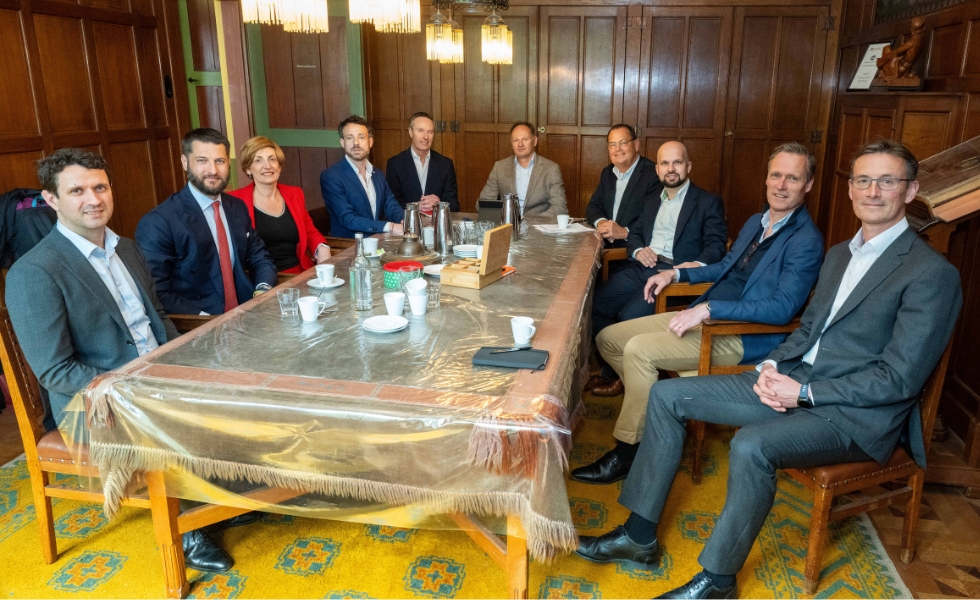
CHAIR: Harry van den Heuvel, Achmea Investment Management
PARTICIPANTS: Joost Bergsma, Nuveen Infrastructure Ita Demyttenare, BlackRock Jocelyn Dioux, Mirova Marco van de Geugten, MN Mark Gilligan, BNP Paribas AM Alts Igor Lukin, Allianz Global Investors Bart van Merriënboer, a.s.r. real assets investment partners Roger Pim, NTR (in partnership met L&G) Albena Vassileva, IFM Investors |
How should governments address energy security?
Demyttenaere: ‘Regulation must lay the foundations for sustained, market-driven innovation. Policymakers create the conditions; the market delivers the innovation. A good example is the commissioning of new wind power installations. Between 2020 and 2022, this took an average of four years in Europe, whereas in China it takes three years and in the United States as little as two years. Another issue is market fragmentation, which of course extends far beyond energy security alone. It is as if all these internal barriers are leading to a significant loss of GDP in Europe. Removing these barriers can help achieve economies of scale, which are important for an efficient infrastructure. A third point is the Savings and Investment Union, which enables a more efficient flow of capital. These measures will go a long way towards tackling the problems.’
Pim: ‘There is clearly a strategic level at which governments must address market failures. Among the most important things governments can do is to speed up the development process, and in particular the planning and licensing process.’
How can we best combine new and existing infrastructure to tackle the energy trilemma (security, affordability and sustainability)?
Vassileva: ‘We have specific projects, including in the Netherlands, where one of our midstream companies has reserved space for a facility to, for example, clean and upgrade used oils and then transport them, for instance for use in sustainable fuels. All these measures will be absolutely essential, including in the coming decade.’
Dioux: ‘We invest both directly in assets and in platforms. Around half of our portfolio consists of direct investments in assets, generally without development risk, and usually at the Ready to Build stage. This enables us to create value in the long term through refinancing, contract negotiations, hybridisation and similar optimisation measures. The other half is invested in platforms, development companies and large enterprises, whereby we assume development risks, but on the basis of a valuation derived from the risk-adjusted value of the underlying portfolio. Upon exit, we can sell the platform as a business to a larger infrastructure fund or utility company, or dispose of the assets individually. This combination of direct exposure to assets and platform investments ensures a balanced portfolio and helps us achieve consistent risk-adjusted returns in our closed-end funds.’
The combination of direct exposure to assets and platform investments ensures a balanced portfolio
Bergsma: ‘Platforms are better suited to a politicised, fragmented, volatile world. If you look at the various risks – supply chains, volume, delays, and so on – a portfolio puts you in a better position to manage across technologies and countries, and thus to deal with these risks. In terms of onshore wind, solar power and battery storage, stand-alone assets are the appropriate approach, but not in all countries. In some countries, you’re probably better off economically if you limit yourself to just one or two technologies. For example, I’m still not convinced about solar power in the Scandinavian countries and the United Kingdom, but I am convinced about solar power in Southern Europe. Offshore wind projects are an exception. These projects are so large that I do not yet really see a platform that focuses on offshore wind.’
What role could nuclear energy play in the context of energy security?
Van de Geugten: ‘Our clients recognise that there may be a role for nuclear energy in the energy transition. As investors, they have to weigh up the balance between risk and return with every investment. For an equity investor, it is currently simply impossible to make a profitable case when you consider the lead time involved in developing nuclear energy and the risk associated with it. A possible solution could be a public-private partnership.’
Adding investments in energy security reduces portfolio risk and provides additional diversification
Van Merriënboer: ‘The challenges in the field of nuclear energy are actually still too great, particularly with regard to the development of nuclear facilities. This takes a very long time, and during the period when there is no income, investors want to be compensated. Arrangements need to be put in place whereby governments pay in advance or pay on the basis of expected returns and annual revenues.’
|
Harry van den Heuvel Harry van den Heuvel has been with Achmea since 2007 and has been responsible for infrastructure investments for Achmea Investment Management’s pension and insurance clients since 2016. Prior to that, he managed alternative investments and property on the insurer’s balance sheet. He previously worked at Van Lanschot Bankiers, Van der Moolen, Alpha Options and Optiver. He holds qualifications in Economics (MSc), Investment Analysis (RBA), Alternative Investments (CAIA) and Real Estate (MSRE). |
|
Joost Bergsma Joost Bergsma is Global Head of Clean Energy at Nuveen Infrastructure, formerly Glennmont Partners, where he previously served as CEO and Managing Partner. He has developed the platform into one of the largest clean energy investment platforms in Europe. In 2024, Bergsma was honoured with the Inspiratia Energy Transition 2024 Lifetime Achievement Award for his contributions to the sector. |
|
Ita Demyttenaere Ita Demyttenaere has been working as a Sustainable and Transition Solutions Manager at BlackRock since November 2024. In this role, he supports Dutch clients in integrating sustainability, transition, impact and climate objectives into their investment policies. Prior to this, he spent more than ten years advising financial institutions across Europe on responsible investment whilst at Morningstar Sustainalytics. |
|
Jocelyn Dioux Jocelyn Dioux has been Investment Director and a voting member of Mirova’s investment committee since 2019. In this role, he identifies, executes and manages asset and corporate transactions in Europe, with a focus on France, Eastern Europe and Northern Europe. Previously, he worked for KPMG TS, Rive Private Investment and 123 IM, where he specialised in the energy transition sector. |
|
Marco van der Geugten Marco van der Geugten is a Senior Portfolio Manager at MN and, in this role, is responsible for advising clients and managing the infrastructure portfolios. He is also jointly responsible for the forestry portfolio and advises MN’s clients on impact investments. Van der Geugten has been with MN for over 18 years and has held various positions, including a long spell as a fiduciary adviser. |
|
Mark Gilligan Mark Gilligan is a member of the Management Board at BNP Paribas AM Alts and, as Head of Infrastructure, is responsible for the infrastructure equities platform. Before joining the company in 2016, he worked at UBS Asset Management as Head of European Infrastructure. Prior to that, he spent ten years practising as a solicitor in Sydney, Australia. Gilligan began his career as a technical geologist. |

|
Igor Lukin Igor Lukin is Managing Director at Allianz Global Investors in Munich, within the Direct Infra Equity Team. Since 2012, he has been working on infrastructure transactions in the energy, telecoms and transport sectors. He focuses on the energy transition and has led investments in Ren-Gas and FUELLA. He previously worked at UniCredit. Lukin holds a Master’s degree in Business Administration and Computer Science from the University of Darmstadt. |
|
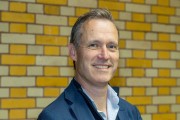
Bart van Merriënboer Bart van Merriënboer is a Senior Portfolio Manager at a.s.r. real assets investment partners and has worked in the financial industry for over 30 years. Since 2007, he has been responsible for the selection, monitoring and implementation of asset managers, as well as portfolio construction and management for institutional investors. Van Merriënboer specialises in private investment asset classes, particularly infrastructure. |
|
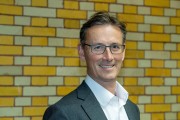
Roger Pim Roger Pim joined NTR in 2025 as Head of Strategy and Capital Raising and a member of the Management Committee. He has over 25 years’ experience in private markets, with expertise in investments, asset management, ESG and business development. He previously worked at Aberdeen, SL Capital and Goldman Sachs. Pim holds an MA in Economics. |
|
Albena Vassileva Albena Vassileva is Executive Director in the Infrastructure Investment Team at IFM Investors, where she is responsible for infrastructure investments in Europe. She works on the energy transition and strategies relating to renewable energy and green fuels, and has been involved in investments in companies including Naturgy and SQ Renewables. Previously, she headed the M&A Energy Team at ABN AMRO and worked at Advent International and ABN AMRO Capital. |

Read the report in the digital magazine