
The biggest challenge lies in implementation (Part 1 of the ‘Local Impact’ round table)
This report was originally written in Dutch. This is an English translation
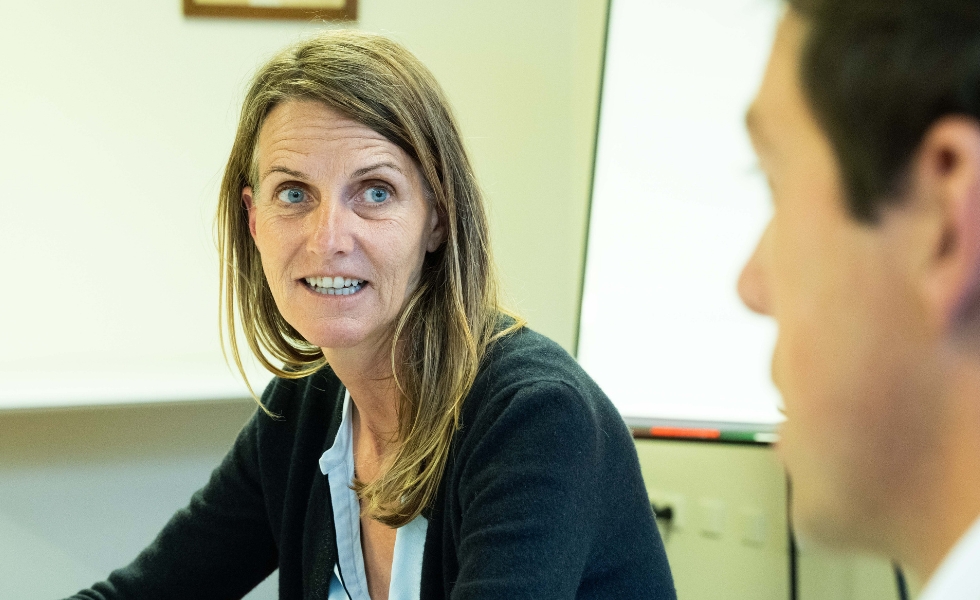
Local impact investing is attracting increasing attention within the pension sector. During the Financial Investigator round table, it became clear that interest in social impact is growing, but that pension funds are simultaneously grappling with issues relating to implementation, scalability and risk management. There was also a call for pragmatism. ‘Let’s not spend the first ten years discussing a perfect plan; let’s just get started and learn as we go.’
By Baart Koster
|
CHAIR: Marlene Stam, Collective Action
PARTICIPANTS: Jorrit Arissen, Van Lanschot Kempen Vincent van Bijleveld, GREEN, Finance Ideas Bob Crans, Montae & Partners Ronald van Dijk, Rail & Public Transport Pension Fund Fabio Rodrigues dos Santos, Eiffel Investment Group Hans de Ruiter, TNO Pension Fund |
Early on in the discussion, chaired by Marlene Stam, Co-Creator of Collective Action, it becomes clear that ‘local impact investing’ means different things to different participants. Bob Crans of Montae & Partners observes that pension fund participants are increasingly showing an interest in investments closer to home. In his view, this is not only down to emotion, but also to the fact that such investments are more recognisable and easier to explain. Participants like to see exactly where their pension money is going. Fabio Rodrigues dos Santos of Eiffel Investment Group believes that the direct link between capital and social returns is a key advantage of local impact. ‘When you can make a local impact, those providing the capital actually experience the social benefits of it. That makes it more tangible and transparent.’
According to several panellists, local investment aligns well with broader global trends. Geopolitical tensions, economic uncertainty and debates about strategic autonomy have led investors to take a more critical look at their dependence on international supply chains and foreign markets. This, too, is fuelling growing interest in investments closer to home. At the same time, several panellists immediately raised reservations about the concept of ‘local’. Vincent van Bijleveld of Finance Ideas warns against defining the desire for local impact too narrowly. According to Van Bijleveld, participants are keen to invest in the Netherlands or Europe, but are often quite open to impact in emerging markets as well.
Local feel
The chosen investment theme also makes a clear difference. For many funds, affordable housing feels more logically ‘close to home’, whilst climate and biodiversity are less readily associated with a local context. Jorrit Arissen of Van Lanschot Kempen Investment Management also sees this distinction reflected among clients. ‘Social themes are often interpreted in a more local way. To make an impact on the climate theme, people are quicker to look at international opportunities.’ Furthermore, it appears that participants do not always focus exclusively on financial returns. According to several participants, there is a growing need for investments that are transparent and socially accountable.
Gradually, the discussion takes on a broader economic dimension. For instance, Ronald van Dijk of the Rail & OV Pension Fund explicitly places local impact within the context of strategic autonomy, innovation and economic resilience within Europe. ‘It’s also about technology, jobs, security and economic strength. Ultimately, that relates just as much to social impact,’ says Van Dijk. Van Bijleveld recognises this. Research by Finance Ideas shows that Dutch pension funds’ dependence on the US is prompting them to reconsider their allocations in favour of Europe. This also shifts the discussion towards the question of how Europe can remain economically competitive. According to several participants, whilst Europe does have various strong technological sectors, it often lacks sufficient capital to enable companies on our continent to continue growing.
The fact that many funds are still postponing local impact investing is not because they do not want to, but simply because they do not have the time for it at the moment.
In this context, the participants highlighted challenges relating to venture capital, scale-ups and the so-called ‘valley of death’. According to Van Dijk, this is one of the areas where a structural problem lies. ‘In Europe, we are not particularly good at scaling up innovative technology. As a result, companies ultimately end up moving to the US, where larger capital markets are available.’
Hans de Ruiter of the TNO Pension Fund can attest to this issue from a practical perspective. For a fund with a membership base that is keenly interested in innovation and technology, he says, this discussion is very much on the agenda. De Ruiter highlights photonics, quantum technology and deep tech, amongst others, as sectors in which the Netherlands holds a strong international position. ‘We’re very strong technologically,’ says De Ruiter. ‘But the scale-up capital is often lacking to keep innovative technology companies here.’
Additionality through growth capital
This gives the discussion a broader economic dimension, as it is no longer just about sustainability or impact in the traditional ESG sense, but also about how pension capital can contribute to innovation, economic activity and development in Europe. Van Bijleveld notes that it is precisely in the early growth phase that the additionality of investments can be significant. In his view, investing in a company that would otherwise struggle to secure funding makes a greater difference than when capital goes to companies that could easily be financed even without an impact fund.
This also raises the question of where impact investing makes a substantial difference. According to Dos Santos, this is precisely where the strength of private credit often lies: financing can be directly linked to specific sustainability targets or operational changes within companies. He cites a PVC manufacturer that is investing heavily in recycling capacity. Through interest rate incentives, sustainability targets can be directly linked to the financing terms. Van Bijleveld does, however, offer a critical nuance here. In his view, financing sustainable businesses makes sense, and a manager can steer a company to some extent through interest rate incentives and other support. But as a pension fund, you do need to distinguish between capital that ‘contributes to’ change and capital that ‘makes a difference’. It is precisely this discussion about additionality and impact that shows the participants are constantly seeking nuance. Consequently, no one at the table presents local impact investing as a simple solution to major social issues. More often, the conversation centres on the practical question of where pension funds can actually make a difference.
The discussion then turns to risk and feasibility. After all, anyone wishing to take local impact seriously will soon find themselves looking at private markets, infrastructure, venture capital or private debt. And with that come higher costs, less liquidity and greater complexity. According to De Ruiter, impact investing does not automatically mean that pension funds have to take a fundamentally different view of risk. ‘We first construct a portfolio based on risk and return,’ he says. ‘Then we look at where we want to generate impact within that portfolio.’
Portfolio balance is crucial
Van Dijk, too, puts into perspective the idea that investing in more complex private asset classes would automatically lead to irresponsible risks. In his view, it ultimately comes down to the overall portfolio balance. Liquidity, interest rate risk and currency risk remain at least as important for pension funds. At the same time, several participants acknowledge that, in practice, local impact investing often involves private markets, infrastructure, venture capital and other less liquid investments. This automatically places higher demands on governance, monitoring and specialist knowledge. According to several participants, smaller and medium-sized funds in particular do not always have the capacity to analyse and oversee complex investments in depth. This makes collaboration with specialist parties crucial, according to several panellists.
With local impact investing, those providing the capital actually experience its social benefits. This makes it more tangible and transparent.
Reputational risk also plays a role. Arissen cites the example of a sustainable property developer in the Netherlands. Despite strong sustainability performance, he says it can sometimes be difficult to raise institutional capital for such projects. ‘Pension funds often harbour the fear: what if this ends up on the front page of the FD?’ According to Arissen, a contributing factor is that institutional investors must be able to continually justify their choices not only in financial terms but also in social terms. He believes this leads to greater caution, particularly when it comes to private markets, higher costs or innovative structures, even when the underlying social impact appears convincing.
Several participants recognise this reluctance. High costs, private equity and high-risk investments are socially sensitive issues. According to De Ruiter, this has consequences for the way in which pension funds invest. ‘In the Netherlands, we sometimes focus more on risk management than on return management. We could do with being a bit more enterprising at times.’ Van Dijk sees not only media coverage but also the broader public debate as a key factor. He believes that as soon as the media focus primarily on costs, incidents or failures, reluctance towards innovative or less liquid investments tends to arise more quickly. ‘Then you have to explain time and again why private equity is, after all, a sensible choice,’ he says. According to Van Dijk, this reluctance applies not only to impact investing, but much more broadly to private markets and more complex investments.
Participants at the helm
At the same time, the panellists note that pension scheme members’ preferences actually seem to offer more scope for social investments. Pension funds are increasingly conducting surveys that explicitly take sustainability, social impact and local investments into account. According to Crans, members regularly show a willingness to accept slightly higher costs or greater risk, provided that the social added value remains concrete and explainable. ‘If you provide tangible examples, it also becomes easier for boards to take that step,’ he says.
Van Dijk sees this as an important development towards the new pension system, in which members’ preferences are becoming more clearly visible. In his view, this also increases the need to explain more clearly where pension funds are invested and why certain choices are made. Ultimately, it is not solely up to board members or fiduciary managers to determine what impact is desirable. When making that choice, they must explicitly take participants’ preferences into account. ‘Otherwise, there is no clear mandate from the participants,’ he says. ‘Ultimately, it must be based on participants’ preferences.’
In Europe, we’re not very good at scaling up innovative technology. As a result, companies end up moving to the US after all.
The general expectation among those present is that this issue will gain further importance in the coming years once the pressure to implement the Wtp eases. As long as funds are busy with the transition to the new system, the participants believe there will be only limited scope for new initiatives and innovative forms of collaboration.
|
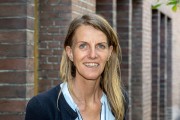
Marlene Stam Marlene Stam has been focusing on impact investing since 2010 and uses her in-depth knowledge in this field to accelerate the transition to a sustainable financial system. She is currently a Partner at Collective Action and a member of the Investment Committee at Planet&People One. Previously, she held positions at companies including Russell Investments, XS Investments and Twelve Capital. |
|
Jorrit Arissen Jorrit Arissen has been with Van Lanschot Kempen since 2015, where, as Co-Head of Alternative Manager Research, he advises institutional clients on strategic allocations within private markets. In recent years, he has pioneered innovative, locally rooted impact solutions for sectors including property and private debt. Arissen has over twenty years’ experience and previously worked at PGGM Investments and APG Asset Management. |

|
Vincent van Bijleveld Vincent van Bijleveld is a Managing Consultant on the sustainable investment team at Finance Ideas. Together with this team, he works on designing, implementing and evaluating MVB policy and its implementation. The team also initiates numerous collaborations between Dutch pension funds and/or international investors, such as within the Dutch & Health Engagement Networks and the Global Real Estate Engagement Network. |
|
Bob Crans Bob Crans has been working at Montae & Partners as a Senior Investment Consultant in Asset Management since 2023. He advises pension funds on investment policy, with a strong focus on sustainability and impact. Prior to this, he worked as an Investment Consultant at Willis Towers Watson. Crans is a CFA Charterholder and holds an MSc in Quantitative Finance and an LLB in Tax Law. |
|
Ronald van Dijk Ronald van Dijk is Chief Investment Officer and a member of the board of the Rail & OV Pension Fund. He has over 25 years’ experience in institutional asset management, gained at organisations including APG and ING, and is Professor of Investment Management at the University of Groningen. He obtained his PhD in Econometrics from Erasmus University. |

|
Fabio Rodrigues dos Santos Fabio Rodrigues dos Santos has over 10 years’ experience in the financial sector. Since June 2025, he has been working with the Private Credit team at Eiffel Investment Group SAS, where he contributes to transactions in the Benelux and focuses on impact investments. Prior to his current role, he worked at HSBC, where he was involved in corporate coverage and investment banking. |
|
Hans de Ruiter Hans de Ruiter is Chief Investment Officer at TNO Pension Fund. He has extensive experience in the financial sector, primarily within the pension fund industry. He previously worked at Hoogovens Pension Fund and APG. He is currently also a board member at Achmea Pension Fund and PMT. At both pension funds, he also chairs the investment committee. |
Read the report in the digital edition of Financial Investigator magazine