a.s.r. Asset Management: Taking a critical look at climate plans

This article was originally written in Dutch. This is an English translation.
Despite all efforts to reduce greenhouse gas emissions, emissions are still rising and the Paris Agreement’s goal of limiting global warming to no more than +1.5 degrees Celsius is becoming increasingly challenging. In this context, it is important for companies to critically assess whether their climate plans are sufficiently ambitious.
By Carlo Cuijpers, Responsible Investment Advisor, a.s.r. vermogensbeheer
Despite all efforts, global CO₂ emissions are still rising. In 2025, emissions rose once again by 1.1% (Global Carbon Tracker, 2025). Whilst renewable energy generation is growing rapidly, total global energy demand is increasing even more sharply (Global Carbon Tracker, 2025). As a result, the world is not on track to meet the targets of the Paris Agreement to limit climate change to less than +2°C and to aim for +1.5°C compared with pre-industrial levels (UNFCCC, 2015). The temperature is already around 1.2°C above pre-industrial levels (EEA, 2025). Without rapid reductions, current estimates suggest that the CO₂ budget will be exhausted before 2030 (Carbon Tracker, 2025).
The difference between +1.5°C and +2°C is significant
By limiting global warming to +1.5°C, some catastrophic effects can be prevented – not only for people and the environment, but also for the economy. To illustrate: if climate change is limited to +1.5°C, an estimated 14 per cent of the world’s population will experience extreme heatwaves once every five years, but at +2°C this figure rises to 37 per cent (UN IPCC, 2025). The economic impact is also projected to increase, from around 0.3% to around 0.5% of global GDP lost by 2100 (IPCC, 2025). According to various projections, global returns on equity investments will be severely affected by this (in real terms).
Inconvenient truth
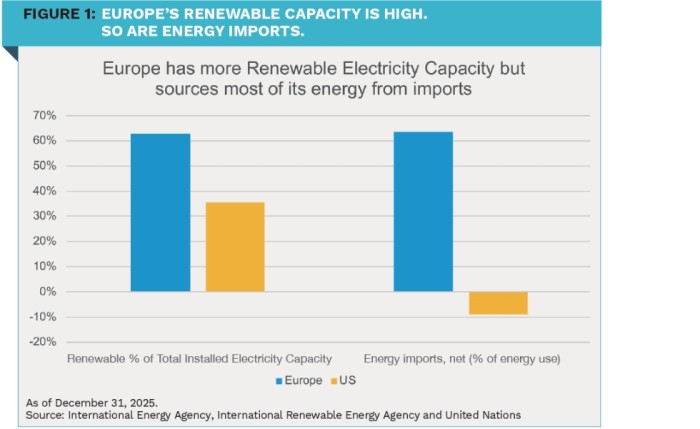
This ‘inconvenient truth’ is also reflected in the practices of listed companies. Only a small proportion of these (12%) are on track to meet the +1.5°C target based on ‘temperature alignment’ (MSCI, 2025). The targets of most others lag far behind: 26 per cent of companies have targets in line with limiting climate change to a maximum of +2°C, 36 per cent are between +2°C and +3.2°C, and the remaining 26 per cent have virtually no targets or policies (in line with >3.2°C; MSCI, 2025).
The economic feasibility of the climate targets has improved. This is mainly because energy from renewable sources has become significantly cheaper in recent years
Institutional investors have been putting pressure on companies for years to set targets in line with the +1.5°C scenario. Dutch organisations are leading the way in this regard. However, the figures above confirm that more action is needed.
SBTi
Investors could be even more critical of companies’ climate targets by assessing whether they are in line with normative emissions reduction pathways based on climate science, aimed at a maximum temperature rise of +1.5°C. Independent validation by organisations such as the Science Based Targets initiative (SBTi) helps to properly assess the level of ambition of these targets. By the end of 2025, the climate targets of 19 per cent of companies in the MSCI ACWI had been validated by the SBTi (MSCI, 2025; SBTi, 2026), including companies with targets aligned with the +2°C limit and whose short- or medium-term targets (‘near-term targets’) had been validated.
Based on the ‘temperature alignment’ assessments of companies, many companies would still need to tighten their targets in order to have them validated by the SBTi.
The positive side
The good news is that the economic feasibility of such targets has increased. This is mainly because energy from renewable sources has become significantly cheaper in recent years. Since 2010: onshore wind -55 per cent, solar -87 per cent, and battery storage -93 per cent (IRENA, 2026). According to IRENA (2026), energy systems relying solely on solar and wind generation, combined with storage capacity, are already more cost-effective in many regions than systems that include a share of energy generation from fossil fuels.
Before institutional investors ask directors to take a critical look at their climate targets, they must also take a critical look at themselves
Furthermore, an increasing number of scientists envisage a scenario in which climate change may briefly exceed +1.5°C (‘limited overshoot’) and then decline again through the large-scale capture and storage of CO₂. Despite all this, the general sentiment surrounding sustainability and the energy transition is currently negative. Engagement can help to persuade directors to take this step after all.
Taking a critical look
Before institutional investors ask board members to take a critical look at their climate targets, they must also take a critical look at themselves. Compared with other sectors, financial institutions are still lagging behind in terms of SBTi validation, whilst to achieve climate targets they should, broadly speaking, be keeping pace with the progress of the transition in the real economy. Furthermore, given their role, by implementing science-based targets in line with the SBTi guidelines – most explicitly by setting ‘portfolio coverage’ targets – they could act as a lever and thereby help to further accelerate progress.
|
IN SHORT The world is not on track for Paris: emissions and energy demand continue to rise. The difference between +1.5°C and +2°C is significant for people, the economy and returns.Very few listed companies have targets in line with +1.5°C. SBTi validation helps investors critically assess climate targets. Cheaper renewable energy increases the feasibility. Financial institutions, too, must tighten their own targets. |
Read the article in the digital edition of Financial Investigator magazine