Taking risks together, making an impact together (part 3 of the ‘Local Impact’ round table)
This report was originally written in Dutch. This is an English translation
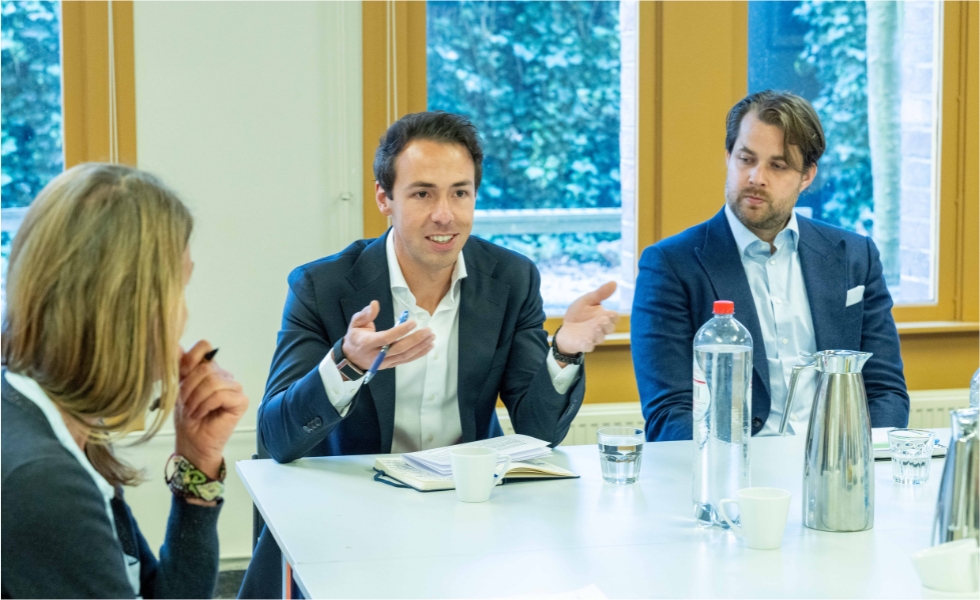
An increasing number of pension funds are exploring how they can also create social value locally through their investments. Following the organisational and operational issues discussed in Parts 1 and 2, the final part of the round-table discussion moved on to the next topic: how can pension funds manage the risks associated with local impact investing without losing sight of their social ambitions? What is the role of blended finance and the government?
This is Part 3 of the round-table report. Part 1 and Part 2 were published previously.
By Baart Koster
|
CHAIR: Marlene Stam, Collective Action
PARTICIPANTS: Jorrit Arissen, Van Lanschot Kempen Vincent van Bijleveld, GREEN, Finance Ideas Bob Crans, Montae & Partners Ronald van Dijk, Rail & Public Transport Pension Fund Fabio Rodrigues dos Santos, Eiffel Investment Group Hans de Ruiter, TNO Pension Fund |
Blended finance and the government’s role
The question of how risks can be better shared then leads the discussion to blended finance and the government’s role. Van Dijk wonders aloud why blended finance is still used relatively sparingly in the Netherlands, whilst comparable structures have existed internationally for some time. In such arrangements, for example, a public body absorbs the first loss, making it easier for institutional investors to get on board. According to Van Dijk, such an arrangement could act as a key catalyst, particularly for innovative growth financing. ‘Perhaps a single euro of public money could mobilise many times that amount in private capital.’ He refers, amongst other things, to international development projects, where, in his view, blended finance has been successfully applied for some time. De Ruiter also recognises that blended finance can help to lower certain barriers, particularly in markets where there is still little track record available. After all, many impact funds and venture capital firms are still at a relatively early stage of development. ‘The pool simply isn’t that big yet,’ says De Ruiter. ‘So sometimes you have to accept that you’re taking a bit more entrepreneurial risk.’
According to De Ruiter, this also means that the assessment is shifting more strongly towards the quality of teams and implementers. When a fund has not yet built up a long track record, trust in the people behind the strategy becomes more important. At the same time, Arissen observes that many institutional investors continue to struggle with that sort of entrepreneurial risk. In his view, pension funds’ risk appetite is often lower than that of private entrepreneurs or family offices. ‘An entrepreneur who has just sold his business views risk very differently,’ he says. ‘With pension funds, you tend to see more caution.’
According to Arissen, a contributing factor is that institutional investors do not just look at returns, but also pay close attention to reputation, governance and the social accountability of investments. In his view, this can lead to extra caution, particularly in innovative or less mature markets. Furthermore, pension funds ultimately manage collective pension funds and are accountable to the public. According to Arissen, this automatically makes them less willing to take risks than private investors or family offices. Van Bijleveld adds an important nuance here: there are impact solutions to suit everyone’s wishes and constraints, ranging from in-depth proof-of-concept impact to contributions to change at scale. That’s perfectly fine, because both are necessary, as long as you know what you’re buying and communicate that clearly.
Just start small. So don’t spend ten years talking about a perfect plan; just get started and learn as you go.
Logical priorities
As the discussion progresses, it focuses more specifically on the question of which themes pension funds wish to make a local impact on. Health emerges as a recurring topic. This is not entirely surprising, as several of the funds present have a membership base directly linked to healthcare, technology or social services. For the TNO Pension Fund, for example, innovation is a logical priority, according to De Ruiter. As a result, the fund naturally gravitates towards technology, venture capital and deep tech. ‘If innovation is important to your members, you’ll soon find yourself on that side of the market,’ he says. ‘Because that’s where most of the innovation is.’ The energy transition is also frequently cited as a logical ‘local impact’ theme. According to Dos Santos, this is also an area where impact can be made relatively visible and easy to explain. Investments in energy infrastructure, battery storage and renewable energy projects directly address social issues that members recognise. ‘With the energy transition, you can demonstrate quite concretely what you’re financing,’ says Dos Santos.
With other themes, the situation is more complex. Whilst various participants do view biodiversity as a major societal risk, they also find it difficult to develop clear investment categories for it. Van Bijleveld even describes biodiversity as a greater structural risk than climate change, but at the same time acknowledges that, in practice, it is still difficult for investors to invest in it in a concrete way. Unlike with the energy transition, there are fewer investment opportunities relating to biodiversity in which institutional capital can be deployed at scale with relative ease.
Security and defence are also briefly discussed, particularly in relation to strategic autonomy and European resilience. According to Van Dijk, a significant portion of some funds’ portfolios indirectly touches on such issues. At the same time, these themes transcend the local and even the national level. ‘When it comes to security, you quickly end up at the European level,’ he says. This brings us back to a previous point of tension: whilst local impact investing is all about proximity and recognisability, social issues rarely adhere strictly to national borders.
Start small
De Ruiter believes that the biggest challenge in local impact investing lies not primarily in vision or ambition, but mainly in implementation. In his view, there is a great deal of analysis and consultation within the sector, but it proves more difficult to actually get initiatives off the ground. ‘We’re very good at analysing and making plans in the Netherlands,’ he says. ‘But ultimately, you just have to get started.’ In his view, stakeholders sometimes wait too long for perfect structures, full consensus or fully developed governance frameworks, whereas small-scale pilot projects can actually help to build up experience. Crans recognises this. In his view, the demand for local impact products often only emerges in practice once such propositions actually become available. Pension funds are still regularly seeking to define exactly what local impact investing entails. According to Crans, concrete products can actually help to further stimulate that discussion.
De Ruiter refers to previous examples of joint product development within the Dutch pension sector. In his view, this demonstrates that collaboration is indeed possible when parties are prepared to work together. At the same time, he warns against making local impact investing any larger or more complex than necessary. ‘Just start small. So don’t spend ten years talking about a perfect plan; just get started and learn as you go.’
|
Marlene Stam Marlene Stam has been focusing on impact investing since 2010 and uses her in-depth knowledge in this field to accelerate the transition to a sustainable financial system. She is currently a Partner at Collective Action and a member of the Investment Committee at Planet&People One. Previously, she held positions at companies including Russell Investments, XS Investments and Twelve Capital. |
|
Jorrit Arissen Jorrit Arissen has been with Van Lanschot Kempen since 2015, where, as Co-Head of Alternative Manager Research, he advises institutional clients on strategic allocations within private markets. In recent years, he has pioneered innovative, locally rooted impact solutions for sectors including property and private debt. Arissen has over twenty years’ experience and previously worked at PGGM Investments and APG Asset Management. |
|
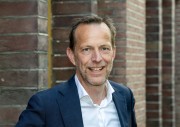
Vincent van Bijleveld Vincent van Bijleveld is a Managing Consultant on the sustainable investment team at Finance Ideas. Together with this team, he works on designing, implementing and evaluating MVB policy and its implementation. The team also initiates numerous collaborations between Dutch pension funds and/or international investors, such as within the Dutch & Health Engagement Networks and the Global Real Estate Engagement Network. |
|
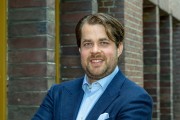
Bob Crans Bob Crans has been working at Montae & Partners as a Senior Investment Consultant in Asset Management since 2023. He advises pension funds on investment policy, with a strong focus on sustainability and impact. Prior to this, he worked as an Investment Consultant at Willis Towers Watson. Crans is a CFA Charterholder and holds an MSc in Quantitative Finance and an LLB in Tax Law. |
|
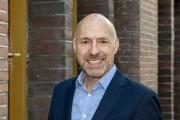
Ronald van Dijk Ronald van Dijk is Chief Investment Officer and a member of the board of the Rail & OV Pension Fund. He has over 25 years’ experience in institutional asset management, gained at organisations including APG and ING, and is Professor of Investment Management at the University of Groningen. He obtained his PhD in Econometrics from Erasmus University. |
|
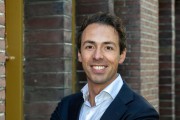
Fabio Rodrigues dos Santos Fabio Rodrigues dos Santos has over 10 years’ experience in the financial sector. Since June 2025, he has been working with the Private Credit team at Eiffel Investment Group SAS, where he contributes to transactions in the Benelux and focuses on impact investments. Prior to his current role, he worked at HSBC, where he was involved in corporate coverage and investment banking. |
|
Hans de Ruiter Hans de Ruiter is Chief Investment Officer at TNO Pension Fund. He has extensive experience in the financial sector, primarily within the pension fund industry. He previously worked at Hoogovens Pension Fund and APG. He is currently also a board member at Achmea Pension Fund and PMT. At both pension funds, he also chairs the investment committee. |
Read the report in the digital edition of Financial Investigator magazine