No impact without a Theory of Change (round-table discussion on ‘Measurable Impact’ – part 1)
This report was originally written in Dutch. This is an English translation.
How can you prevent impact investing from getting bogged down in spreadsheets, assumptions and complex frameworks? And how can you make social impact understandable to participants and end investors? During the round-table discussion ‘From Theory of Change to Measurable Impact and Financial Return’, experts discussed the future of impact investing.
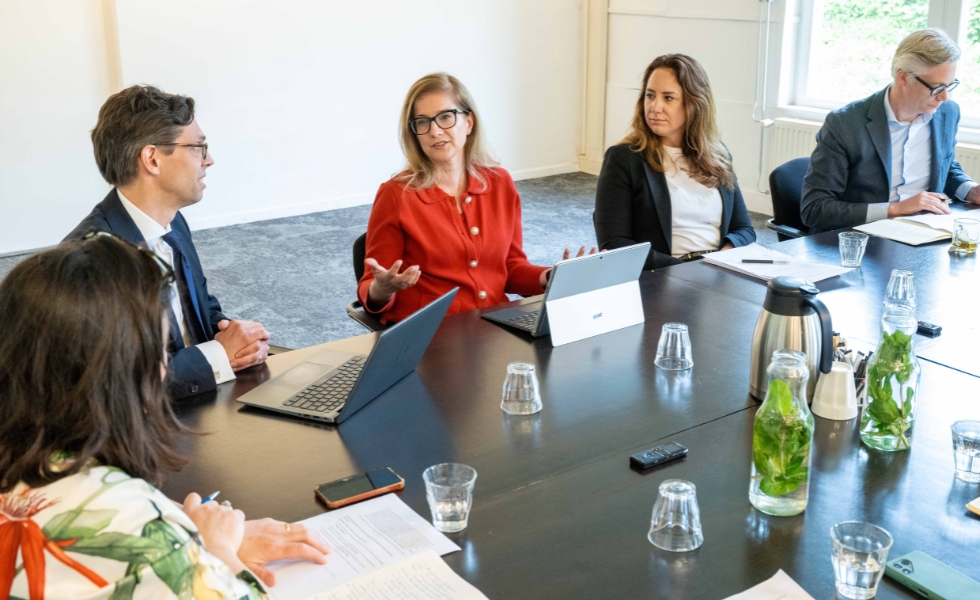
In part 1 of the round-table discussion ‘From Theory of Change to Measurable Impact and Financial Return’, the participants discuss why, in their view, a Theory of Change forms the basis for impact investing. When does an investment actually add social impact, and how do you prevent impact from becoming a mere paper exercise?
By Daphne Frik
|
CHAIR Laure Wessemius-Chibrac, NAB impact investing
PARTICIPANTS Marjolein Meulensteen, a.s.r. vermogensbeheer Sasha Miller, Nuveen Cherry Muijsson, BlackRock Gert-Jan Sikking, PGGM Vincent Triesschijn, ABN AMRO Eszter Vitorino, Van Lanschot Kempen Investment Management Boris van Warmerdam, Wonderland Impact Investments |
Is a Theory of Change essential for achieving measurable impact, or are we making impact investing unnecessarily complex?
Sasha Miller: ‘For us, a Theory of Change is essential. We were one of the founders of the Operating Principles for Impact Management and regard these as the basis for a high level of integrity in impact investing. You need to be able to explain what change you want to achieve, how you intend to achieve it and how you will measure it. At the same time, there is a strong demand in the market for ways to keep impact scalable and practical.’
Cherry Muijsson: ‘I see a Theory of Change as a business plan for impact. Particularly with long-term investments, you need a framework to hold yourself accountable. It helps to bring financial and non-financial objectives together. Without such guidance, impact can quickly become abstract.’
Marjolein Meulensteen: ‘A Theory of Change is important, but we don’t need to make it more complicated than necessary. Formulating a Theory of Change is, in essence, simply thinking about which transition you want to support. It doesn’t have to be a PhD thesis.’
Gert-Jan Sikking: ‘I agree. At PGGM, we distinguish between general sustainability and genuine impact investments. For impact, you need to be able to demonstrate in advance what contribution an investment makes and what wouldn’t happen without that investment. That should simply be part of the investment case.’
Eszter Vitorino: ‘A Theory of Change provides direction. Without it, you’re mainly just collecting data without knowing what you’re actually working towards. You need a sort of North Star.’
Vincent Triesschijn: ‘The theory is important, particularly to prevent “impact washing” when scaling up impact investing. If we want impact investing to make a material contribution to solutions for today’s social problems, then time is of the essence and scale is crucial.’
Boris van Warmerdam: ‘We all know how to calculate returns and risk. Impact needs to be integrated in exactly the same way. But there is still a great deal of uncertainty and a variety of definitions in the market. That is why, as a sector, we need to collaborate more closely to make impact investing a genuine part of professional investing and industry standards. Only then can you dispel the perception that impact investing automatically yields lower returns or is a separate niche.’
Do institutional investors sometimes make impact investing too complicated with long lists of requirements and extensive impact frameworks?
Triesschijn: ‘If, after applying all the filters and requirements, you’re left with no managers at all, then the list is simply too long. Of course you have to be critical, but proportionality is important.’
Vitorino: ‘You have to distinguish between minimum requirements and nice-to-haves. Otherwise, you’ll make it impossible for yourself.’
Sikking: ‘And not every investment needs to be an impact investment. In our 3D strategy, we weigh up return, risk and sustainability for every investment. Within that framework, we also have investments that meet minimum sustainability standards but do not otherwise make a specific positive contribution. That’s fine, as long as the risk-return profile is sound.’
Meulensteen: ‘You also need to remain flexible. Particularly with growth companies, the reality on the ground sometimes changes faster than your original Theory of Change. As an investor, you then need to be prepared to adapt.’
Perhaps we should sometimes simply recognise ecological and social value for what they are, rather than reducing everything to a figure in euros.
Triesschijn: ‘That’s why we sometimes talk about a sort of “Theory of Change light”. Not every investment requires the same level of detail.’
How do you prevent a Theory of Change from remaining primarily a paper exercise rather than a tool for driving real impact?
Triesschijn: ‘The biggest risk isn’t the theory itself, but its incorrect application. On paper, everything may seem perfectly sound, whilst during discussions or site visits you realise that the reality is very different.’
Sikking: ‘A Theory of Change must never be just a single paragraph in a document. You have to measure, report on and actively manage impact. Otherwise, it really does remain just a paper exercise.’
Triesschijn: ‘We always say: show what’s happening in the real world. What is a company actually doing with the money?’
Miller: ‘The investor’s role is crucial in this regard. For example, we’re investing in an outcome bond in South Africa focused on ecological restoration using spekboom vegetation. It’s a bond with a 14-year term, but that’s precisely why we organise annual meetings with scientists and investors to monitor progress.’
Vitorino: ‘Measurement often involves looking back, whereas a Theory of Change looks ahead. The two need to complement each other.’
Muijsson: ‘Precisely because impact investments are often held for the long term, you need to be able to check along the way whether you’re still on track.’
When is an investment truly impactful, and how does it differ from conventional sustainable investments?
Sikking: ‘Not every sustainable investment is automatically an impact investment. ESG or sustainability is often about limiting risks or reducing negative impact. With impact investing, you really need to be able to demonstrate that an investment consciously contributes to positive change that would otherwise not happen, or would happen less quickly.’
Triesschijn: ‘The key question remains: what would happen without this investment? That is also why we focus specifically on causality and on what an investment actually adds in the “real world”.’
Vitorino: ‘That is also what makes impact investing more complex than traditional ESG integration. It is not just about exclusion or risk mitigation, but also about whether capital actually helps to enable certain transitions or solutions.’
Miller: ‘That is precisely why a clear Theory of Change remains so important. Without such a framework, it becomes very difficult to distinguish between general sustainable investments and those explicitly aimed at social impact.’
|
Laure Wessemius-Chibrac Laure Wessemius-Chibrac has been committed to developing the impact investing ecosystem for many years and is Managing Director of the NAB, the trade association for impact investors in the Netherlands. Previously, she was Head of Investments at Cordaid, an international NGO and impact investor, and worked as an investment banker at BNP Paribas and ABN AMRO Rothschild. |
|
Marjolein Meulensteen Marjolein Meulensteen works as a Senior Adviser on Responsible Investment at a.s.r. Asset Management. In her role, she is responsible for developing strategy and policy on responsible investment, as well as policy on biodiversity and natural resources. She previously worked at a.s.r. as Sustainability Manager and as a Consultant in International Environmental Policy. Meulensteen holds an MSc in Ecology & Natural Resources Management from Utrecht University. |
|
Sasha Miller Sasha Miller is Head of RI Strategy within the Responsible Investing team at Nuveen. She leads a team focused on shaping the strategy for the responsible investing platform. This includes developing RI capabilities and conducting research across various regions, as well as innovating and developing client solutions and partnerships. She is also chair of the RI SteerCo and oversees the Nuveen impact platform. |

|
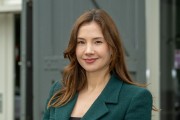
Cherry Muijsson Cherry Muijsson is Chief Investment Officer in BlackRock’s fiduciary team for pension funds in England, the Netherlands and the Nordics. She is responsible for portfolio construction, asset allocation and research, and leads BlackRock’s investment case for nature and biodiversity. She obtained her PhD in financial macroeconomics from the University of Cambridge. Her work has been published in international journals. |
|
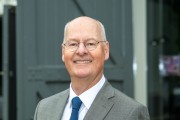
Gert-Jan Sikking Gert-Jan Sikking is a Senior Sustainability Adviser within the Total Portfolio Management department at pension asset manager PGGM. Since 2015, he has been focusing on Sustainable Development Investments and on measuring and reporting the environmental and social impact of SDI and impact investments. Sikking is currently involved in various initiatives in the Netherlands in the field of social entrepreneurship. |
|
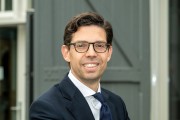
Vincent Triesschijn Vincent Triesschijn is Head of Sustainable Investment at ABN AMRO and focuses on integrating sustainability into investment decisions, engagement and regulatory matters. He previously worked at UBS, J.P. Morgan and Van Lanschot Kempen. He holds a Master’s degree in Sustainability from the University of Cambridge and advises sustainable start-ups. Under his leadership, sustainable investment at ABN AMRO grew significantly and the bank won several European awards. |
|
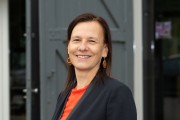
Eszter Vitorino Eszter Vitorino is Impact Lead at Van Lanschot Kempen Investment Management. She works at the intersection of capital, sustainability and systemic change, and translates complex impact issues into clear insights on how investments can contribute to measurable social and environmental outcomes. |
|
Boris van Warmerdam Boris van Warmerdam is a Partner at Wonderland Impact Investments, an investment management platform that creates large-scale social and financial value through impact propositions in the fields of land, water, property and infrastructure. Van Warmerdam has over 20 years’ experience in fund and portfolio management, business development, finance and risk. Previously, his roles included co-founding LIFE Europe and serving as Managing Director at Grosvenor. |
Read the report in the digital magazine