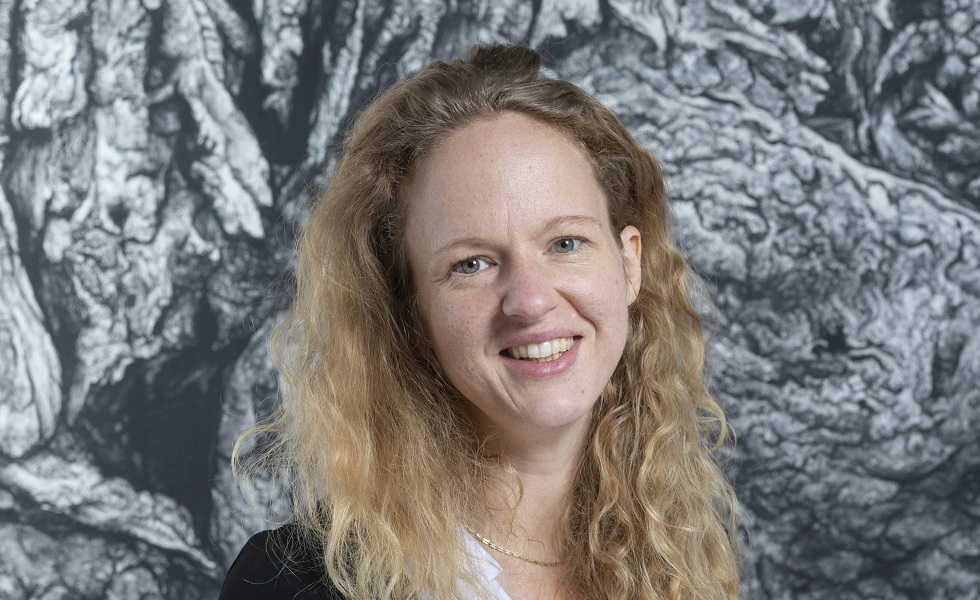
Evelien van Hilten: Always looking ahead
This report was originally written in Dutch. This is an English translation
She is endlessly curious, a realistic idealist, isn’t afraid to step outside her comfort zone, and puts the participant first. Financial Investigator spoke to Evelien van Hilten, Asset Management Manager at PME Pension Fund.
By Lies van Rijssen
‘The possibility of a career in the world of investment had never crossed my mind. At university, I actually completely ignored investment theory. However, from the very first lesson at secondary school, I was captivated by economics. I also really enjoy maths, but I find it lacks the human element that makes economics so dynamic.
In 2008, asset management more or less came my way by chance. After my traineeship at ING, I was looking for a new job. An acquaintance advised me to go for an interview at NN IP, which had carried out a lot of restructuring in the wake of the Lehman crisis and had plenty of vacancies. I’d be a good fit for the dynamic environment and the people there. That turned out to be true. I was hired and became hooked on the financial sector and the world of investment.
During the first ten years of my career, the question of where all the money coming my way actually came from – and what exactly the rationale behind it was – began to gnaw at me more and more. That question wouldn’t let me go. That, in part, prompted me to make the move from the asset management side to the asset owner side. I wanted to be close to the people for whom I was investing. Many members of the PME pension fund, my current employer, live in Eindhoven, just like me. Their proximity and the clarity that I’m doing my job for them are a huge source of motivation for me. When one of our pensioners tells me that the simple fact that his pension is well organised gives him so much peace of mind, it really gives me a buzz. I could immerse myself in investment theory or governance issues every day, but this is what really matters: financial peace of mind for our members.
The regulations governing our work and the supervision of its implementation are extensive and define our operating environment, partly due to the transition to the new pension system. I do not find this restrictive. Within the existing frameworks, we have plenty of scope to design appropriate policies that enable us to serve our members. Our sector continues to evolve. Recently, we have seen a sharp rise in geopolitical risks. Whilst we long believed we were moving together towards ever-greater globalisation, private markets and sustainability, it now appears that none of these can be taken for granted. Dealing with geopolitical risks – such as the war with Iran and the question of how independent Europe can remain – is a daily focus in my work. The same applies to sustainability. This is a subject close to my heart, and PME is committed to maintaining its pioneering role in this area. Given the changing environment, we do see that attention is now also firmly focused on the impact of sustainable investing on returns and on explaining this to members. The transition to the new pension system is, of course, another very important issue. PME aims to join the new system on 1 January 2027. Another key aspect of my work is the question of how we can help the technology sector – where our members work – to grow.
Stepping outside your comfort zone from time to time can open up your mind and provide new insights. I would recommend it to everyone
In the pensions sector, the rise in the number of female employees is, for the time being, much more pronounced than in the asset management sector. This makes the drive for greater diversity in asset management even more urgent. People in that sector do fully recognise the need for diversity. Diversity simply leads to better-informed decisions; there’s no longer any debate about that. I’ve asked quite a few capable women why they don’t aspire to a career in asset management. From their answers, I gather that there are many misconceptions about our profession. The fear of being responsible for large sums of money, for example, seems to hold women back. But you don’t invest on your own – we have well-established processes in place for that! Hopefully, women will start applying for asset management roles more often. After all, women are often exceptionally good at empathising with others. This fits in well with the shift in thinking within the asset management sector: it’s increasingly about developing products that suit the client. From product push to product pull.
Personally, I’m particularly keen to champion greater inclusivity. New groups within your organisation must be able to feel at home. Recognise that this is necessary. Try to adapt the group dynamics accordingly. When I speak to male colleagues about this, I really do sense a great deal of goodwill, but the awareness isn’t always there yet. Sometimes this comes down to seemingly simple matters, such as the choice of a conversation topic. You can learn to take into account what newcomers might find interesting. Football and cycling are, traditionally speaking, simply more ‘male’ topics. That makes it easier for them to find their place within the organisation. Bringing about change without anyone feeling slighted or thinking they’re being lectured is tricky. Where do you start? Are there actually training courses for this? And how would I personally like to see things change? I find it quite difficult to answer those questions and notice that others are struggling with them too. What we as women can do, in any case, is take responsibility for pointing out what we see going wrong. We do need to proceed sensitively, though. Precisely because there is goodwill, it’s important to maintain a respectful atmosphere. The shift you’re asking people to make takes time.
The fact that I’ve now switched several times between asset management and asset owner work environments has broadened my perspective and enriched my knowledge and insights. Having sat on both sides of the table has cleared up many misunderstandings I had about ‘the other side’. Misunderstandings about how the work processes operate, the reasons behind them, their importance and their significance on both sides. As a result, I suspect my career has taken a different path to that of many others in the sector. I think all sorts of misunderstandings about ‘the other side’ persist for people who continue to work within a single column. Stepping outside your comfort zone from time to time can open up a lot of mental space and provide new insights. I can recommend it to everyone.
The most significant moment in my career came during the 2008 crisis and the resolution of the Lehman Brothers bankruptcy, when I was confronted with the urgency in the financial world to get things in order. That called for swift, well-considered action and creativity.
The need for action meant that I was immediately given a great deal of responsibility. I went through a steep learning curve and came to realise the importance of looking ahead: a decision can have major and unexpected consequences ten years down the line. When I now hear young people say that the value of their expensively purchased home or share portfolio cannot go down, I find that quite worrying.
I can immerse myself in investment theory or governance issues every day, but ultimately it’s about creating financial peace of mind for our members
The fact that I also worked as a trader at the start of my career taught me at a young age how to overcome certain hurdles, stand up for myself, dare to say ‘no’ and make quick decisions. This, too, has proved to be extremely valuable.
I’m a hard worker; I want to grow quickly and keep doing so. A ‘quiet and operational’ role won’t make me happy. I want to be able to make and implement plans, bounce ideas off others, learn new things and feel that I’m growing. I also enjoy helping others within an organisation to develop, and in doing so, helping the organisation itself. I love working with a team to navigate and experience long-term projects. I’m curious and appreciate organisations that give me the chance to put my curiosity to productive use for them. When I was in my early thirties, I realised that, as a senior portfolio manager, I’d hit a ceiling. What could the next step possibly be? I needed experience to take the next step, but I couldn’t build up that experience because I wasn’t given the chance.
It was partly this struggle that led to my decision to make a lateral move into the world of asset ownership. A few years later, DMFCO approached me. They offered me the chance to become a manager because they considered my profile, knowledge and experience to be exceptional. To this day, I think it’s brilliant that they dared to offer me that role back then, purely on the basis of my profile, without any guarantee of success. Usually, organisations opt for certainty. Good employees can get stuck in that mindset. DMFCO dared to take a different path.
Women are often exceptionally good at empathising with others. That fits in well with the shift in thinking within the asset management sector
At PME, my personal choices and my drive for my work come together. Personally, I’m deeply committed to sustainability. The fact that I work for a pension fund that aims to lead the way in this area fits seamlessly with my values. During the interviews for my role, that connection became apparent very quickly. Through this organisation, I get to look after the pensions of my neighbour across the road and the father of a friend. Here, I get to contribute to the continued growth of the high-tech sector in which we are right at the heart of. I get to be part of the wonderful things that the Dutch business community is achieving. Honestly, I work here for much more than just my salary.
I’ve always acted on the basis of my ideals. My husband, who also works in the high-tech sector and is a member of PME, supports me in this. We don’t follow any standard gender roles at home either.
When everything is out in the open, you start to see the world differently. People are at the heart of what I do. Seeing the participants has made my work meaningful. Don’t get me wrong, I’m certainly not naïve. As an investor, I definitely can’t afford to be. I do believe the world needs to become more sustainable, but I also want our participants to have a good pension. Pursuing my ideals must never be at the expense of their pensions.’
|
Evelien van Hilten Evelien van Hilten is an economist and has been Head of Asset Management at PME Pensioenfonds since 2025. After graduating and completing a Global Risk traineeship at ING, she held asset management roles at NN IP for over eight years, including that of Portfolio Manager for Residential Real Estate and Mortgage Loans. From 2017 to 2021, Van Hilten was an Investment Manager at Philips Pensioenfonds. This was followed by four years as Head of Portfolio Management at DMFCO Asset Management. Through her own consultancy firm, established in 2020, Van Hilten served as a member of the Supervisory Board at the Foodservice sector pension fund. |

Read the report in the digital edition of Financial Investigator magazine