
Biodiversity as both a risk and an investment opportunity (’Beyond Net Zero’ round table – part 1)
This report was originally written in Dutch. This is an English translation.
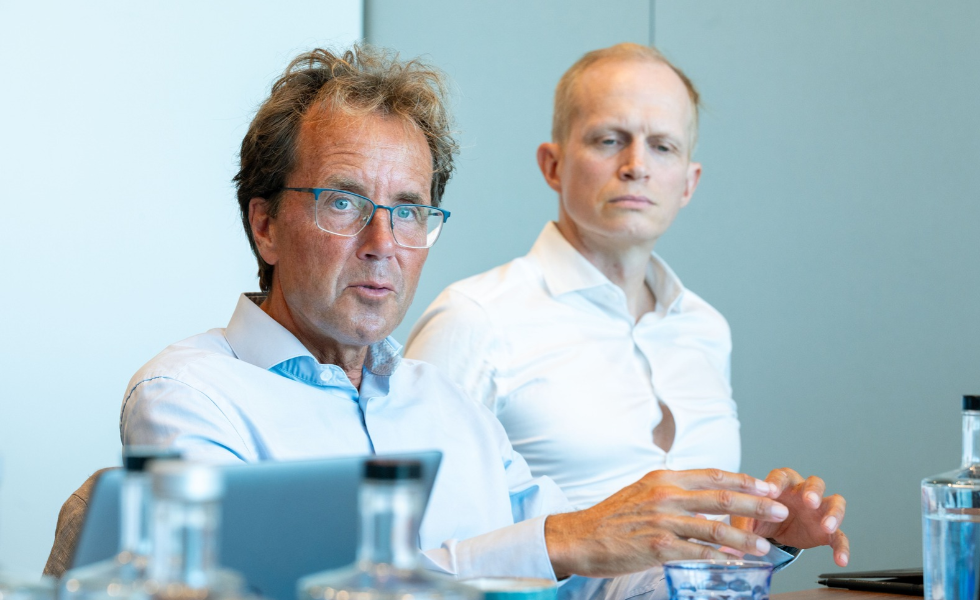
In Part 1 of the ‘Beyond Net Zero’ round-table discussion, the experts discuss why the loss of nature not only poses a financial risk to investors, but also presents opportunities. How can pension funds contribute to the conservation and restoration of biodiversity whilst achieving attractive returns?
By Hans Amesz
|
CHAIR: Jochen Harkema, ING Global Investment Centre
PARTICIPANTS: Tim Balemans, MN Adrien Cambonie, UBP David Hawkins, Allianz Global Investors Robert Klijn, Fair Impact Marjolein Meulensteen, a.s.r. vermogensbeheer Nicholas Moss, Nuveen Natural Capital Karel Nierop, Triodos Investment Management Maria Velkova, Aqua-Spark |
Why is biodiversity a relevant issue for investors?
Marjolein Meulensteen: ‘Around 70 per cent of our economy is heavily dependent on ecosystem services, so biodiversity loss, just like climate change, is a systemic risk. It actually goes without saying that biodiversity is important.’
Karel Nierop: ‘As governments, businesses and investors increasingly internalise these systemic risks, there is a growing realisation that biodiversity loss has a significant impact on business operations, projects and the portfolio. This also creates opportunities to invest in adapted and new value chains.’
Robert Klijn: ‘The N:P ratio – the ratio of nitrogen to phosphate in coastal waters – is currently 375:1, whilst the biologically optimal value is 16:1. This makes the system structurally vulnerable. Some of that nitrogen comes from abroad via the Rhine, but the Netherlands also makes a significant contribution of its own. We are now trying to resolve an issue that went wrong decades ago. The question is how the financial community can help with this.’
Maria Velkova: ‘I am here to highlight the perspective of the so-called blue economy. More than two-thirds of the Earth’s surface is covered by water, and we obtain more than 50 per cent of our oxygen from the oceans. Something we also rarely stop to consider is that three billion people rely on fish and seafood as their primary source of protein. To put that into perspective, that is more than pork and beef combined. At the same time, investment in the oceans and SDG 14 is the most underfunded. That presents an opportunity for investors.’
Nicholas Moss: ‘Biodiversity and ecosystem services form the basis of our economy. This applies in particular to natural resources such as agricultural land, forest land and other forms of natural capital, whose long-term productivity depends on healthy ecosystems. At the same time, global demand for food, fibre and timber continues to grow. We believe that investors should focus on those sectors where they can invest directly in biodiversity and ecosystem services whilst also benefiting from strong structural demand drivers. By investing in the sustainability, resilience and productivity of these assets, investors can create significant value for both nature and their portfolios. In our view, this is one of the few sectors in which investors can combine attractive long-term returns with the conservation and enhancement of the natural systems that underpin economic activity.’
Tim Balemans: ‘Our clients – large Dutch pension funds – attach great importance to the conservation of biodiversity. Precisely because pension funds have obligations spanning decades, it is important to look beyond the issues of the day and focus on developments that may have material long-term consequences for the economy, businesses and investment portfolios.
Biodiversity is one such issue. At the same time, we are seeing the consequences of biodiversity loss and climate change not only in the future, but already all around us today. This summer’s heatwaves and periods of drought demonstrate that the economy and society depend on healthy ecosystems.
What does biodiversity mean to you?
David Hawkins: ‘For us, it’s primarily about the integrity of the ecosystem in the places where we invest. That means that, during the due diligence phase, you already investigate what the project in question will mean for land use, water, the living environment and local communities. Do we feel comfortable committing to that?’
Nierop: ‘Many people view nature and biodiversity as mere scenery. But nothing could be further from the truth: we humans are part of that nature and, together with countless other species, form one vast ecosystem. The fact that many people lack this awareness is perhaps the deeper cause of the biodiversity crisis the world is facing.’
Around 70 per cent of our economy is heavily dependent on ecosystem services, so biodiversity loss, just like climate change, is a systemic risk.
Meulensteen: ‘In an ecosystem, everything is interconnected. If you remove one component, the whole thing can fall apart. We try, particularly as investors, to measure biodiversity using a single metric, and that never gives a complete picture. Nevertheless, it is important to gain as clear an understanding as possible of the impact and interdependencies that our investments have on biodiversity. Fortunately, investors are also becoming increasingly aware of this.’
Moss: ‘By investing in agricultural land and woodland, we are investing in natural resources: water, soil, air, trees and crops. These resources are entirely dependent on biodiversity and the surrounding ecosystems, and in one way or another influence the performance of the assets. Biodiversity therefore has real social and economic consequences.’
To what extent do you view biodiversity primarily as a financial risk that needs to be mitigated, or rather as an issue where investors should actively seek to create a positive impact?
Balemans: ‘We assess both the impact of companies on natural capital and their dependence on ecosystem services. This enables us to move from a conceptual and general analysis to a portfolio-level analysis, so that we can identify and analyse these systemic risks. In addition, we can use this, for example, to ask companies to map out both their land-use footprint and their dependence on ecosystem services, so that we can engage with these companies and try to mitigate these risks within our portfolios. As for the opportunities: last year we introduced biodiversity as an impact theme for two pension funds, and this is the first step towards identifying the potential that lies within the biodiversity theme.’
We are now trying to resolve something that went wrong decades ago. The question is how the financial community can help with this.
Adrien Cambonie: ‘Risk mitigation is the urgent and obvious starting point for investors, because physical risks such as water scarcity and reputational risks are of vital importance today. In the mitigation hierarchy, however, nature-positive finance is defined as a combination of both risk mitigation and positive impact. Halting and reversing biodiversity loss are complementary, and both the risks and the positive effects are needed to resolve the nature crisis we are facing. For us, addressing biodiversity risk is primarily an operational matter (raw materials, water consumption, waste generation, supply chain), whilst the positive impact stems mainly from the products and services we sell.’
Can you give examples of companies that are very effective at addressing biodiversity risks, or that offer solutions to biodiversity loss?
Klijn: ‘In Ghana, there is a company founded by a Dutchman that uses around 11,000 tonnes of human faeces and organic market and household waste to produce 864,000 kilograms of organic fertiliser and 685 megawatts of electricity. Nothing leaves that site. It’s just as the Chinese have been doing for four thousand years. People had their own plot of land and used everything. So no external fertiliser is needed; everything is simply regenerative.’
Nierop: ‘We have many examples of private investment, but within our listed investment universe there is a Japanese company with a positive biodiversity footprint that has already built more than 70,000 sustainable, energy-neutral homes. Native tree species are planted around the housing estates or individual houses, thereby supporting local ecosystems. In this way, the company’s activities genuinely preserve and enhance biodiversity.
Cambonie: ‘I’d like to talk about a Portuguese producer of cork oaks. The great thing about cork oaks is that you don’t have to fell the tree to harvest the bark. The forests of cork oaks are called Montados and are classified as biodiversity hotspots. The company, which has owned this land for generations, therefore manages an asset that is a biodiversity hotspot. What’s more, they can harvest this material, which is not only lightweight and sustainable but also forms a natural barrier against fire and can be used for insulation. The material is also used to make trainers, furniture such as chairs and stools, and similar items. Furthermore, the company provides leading-edge information in its sustainability report. They have even quantified the value of the ecosystem services they support by managing these forests.’
Moss: ‘In the United States, we are investing in the mitigation banking market, which is essentially an active market for biodiversity. According to some estimates, this is worth more than ten billion dollars a year. Projects in this sector involve the restoration of habitats, streams and wetlands. It is a regulated compliance market that is not very well known, but has existed since the 1980s. Over the past twenty to thirty years, a third-party market has emerged, meaning that if you are active in a particular area restoring an ecosystem, you can sell offset certificates to companies that need to offset their emissions. From a business and financial perspective, with the right projects, it can also be very attractive.’
Velkova: ‘There is a company that operates the first large-scale production plant in China to serve the Asian market – the largest market for fish products. They produce alternative protein that has been tested. We know that it is not only a substitute for fishmeal but also offers other functional benefits. So the technology is there. In Norway, there is a listed company working on cancer treatment that utilises fish by-products and is affiliated with a larger fish production site. We also have a number of aquaculture companies, such as mussel farms in Portugal, which we know can have a positive impact on the environment.
|
Jochen Harkema Jochen Harkema is co-manager of the ING Impact Fund and has been a Sustainable Investment Specialist at the ING Global Investment Centre since 2012. He combines fund selection with the development and assessment of ESG policies. Harkema publishes on material sustainability developments and advises analysts and portfolio managers in this field. He is also the author of ‘Sustainable Investing for Dummies’. |
|
Tim Balemans Tim Balemans is a Responsible Investment Adviser at MN, a fiduciary adviser and asset manager for clients including PMT and PME. In this role, he advises on strategy development and active shareholding in the areas of climate and biodiversity. He also played a key role in establishing biodiversity as a theme within responsible investment and in setting up MN’s engagement programme on biodiversity. |
|
Adrien Cambonie Adrien Cambonie is a specialist in impact investing and an equity portfolio manager at Union Bancaire Privée, where he has built up in-depth expertise in financial and impact analysis, stakeholder engagement and impact measurement over the past eight years. He currently manages a Biodiversity Restoration fund and deploys capital in the public markets to drive environmental change. |

|
David Hawkins David Hawkins has over 15 years’ experience in sustainability and governance within private markets and has recently joined the Impact and Sustainability Private Markets team at Allianz Global Investors. Prior to this, he was Senior Vice President of ESG at NextEnergy Group and Environment & Sustainability Lead within the oil and gas sector, with responsibilities spanning aviation, logistics and property, amongst other areas. |
|
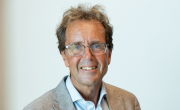
Robert Klijn Robert Klijn is the founder of Fair Impact, an independent consultancy firm serving pension funds, asset managers and research boutiques. He began his career in 2002 at ING Equity Markets as one of the first ESG specialists in the Netherlands and, through Fair Impact, has represented several leading ESG research firms. |
|
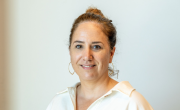
Marjolein Meulensteen Marjolein Meulensteen is Senior Adviser on Responsible Investment at a.s.r. Asset Management. In her role, she is responsible for developing strategy and policy on responsible investment, as well as policy on biodiversity and natural resources. She previously worked at a.s.r. as Sustainability Manager and as a Consultant on International Environmental Policy. |
|
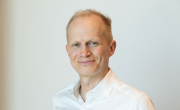
Nicholas Moss Nicholas Moss is Head of Nature-Based Solutions at Nuveen Natural Capital, where he is responsible for developing investment strategies and managing a portfolio in the fields of forestry, agriculture and ecological restoration. With over 15 years’ experience, his roles have included managing a fund focused on sustainable agriculture and forestry. He previously worked at Mirova Natural Capital and PwC. |
|
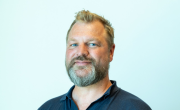
Karel Nierop Karel Nierop is Head of Products & Solutions at Triodos Investment Management. He is responsible for developing scalable impact investment strategies, including in the areas of biodiversity and natural capital. With over 20 years’ experience in banking and impact investing, 15 of which have been spent at Triodos, he combines his extensive investment expertise with a strong focus on the benefits that investments bring to nature and society. |
|
Maria Velkova Maria Velkova is Chief Investment Officer at Aqua-Spark, an Article 9 impact fund that allocates capital across the sustainable aquaculture value chain. She is responsible for managing and expanding the portfolio, which spans production (farming), alternative food ingredients, aqua technology and health solutions. |
Read the report in the digital magazine