
Integrating biodiversity into investment portfolios (’Beyond Net Zero’ round table – part 3)
This report was originally written in Dutch. This is an English translation.
In Part 3 of the ‘Beyond Net Zero’ round-table report, the experts discuss the opportunities for investing in biodiversity via listed markets. The report also examines the links between biodiversity, climate and food security. How can investors set ambitious yet realistic biodiversity targets?
By Hans Amesz
|
CHAIR: Jochen Harkema, ING Global Investment Centre
PARTICIPANTS: Tim Balemans, MN Adrien Cambonie, UBP David Hawkins, Allianz Global Investors Robert Klijn, Fair Impact Marjolein Meulensteen, a.s.r. vermogensbeheer Nicholas Moss, Nuveen Natural Capital Karel Nierop, Triodos Investment Management Maria Velkova, Aqua-Spark |
Is there a place for investing in biodiversity on the public equity markets? And if so, how should this be positioned within an equity portfolio?
Cambonie: ‘It is not only possible to invest in biodiversity via listed markets; it is also essential. Given the scale of the problem, we must make every effort possible. Ten years ago, the United Nations stated that five to seven trillion dollars would be needed annually to achieve the SDGs. That is roughly the size of the private market. I am convinced that we absolutely need public capital, as well as private companies. Large listed companies have the balance sheet strength required to actually invest in the transition.’
Meulensteen: ‘I believe that impact can also be achieved on the stock market by investing in solutions that reduce the negative impact on biodiversity.’
Nierop: ‘So-called green bonds, the supply of which is increasing, offer a way to reverse some of the loss of biodiversity by attracting funds from the private markets.’
Many people view nature and biodiversity as mere scenery. But nothing could be further from the truth: we humans are part of that nature
Moss: ‘Although this is not part of our portfolios, as a company we are involved with impact bonds and have invested in bonds for reforestation and the protection of rhinos. These initiatives are supported by various stakeholders, including the World Bank.’
Velkova: ‘We keep an eye on green bonds, but we don’t see them very often. I think this is due to the lack of a single metric for measuring the effectiveness of green bonds. Perhaps we should take the same approach to biodiversity as we do to the energy sector – namely, not to stop just because there are still many imperfections.’
There is an interconnection between CO₂ emissions, biodiversity and food security. How might we combine these three issues?
Velkova: ‘For us, protein production is the link between these issues, because we see it as the determining factor in what our CO₂ emissions will look like over the next twenty-five years, how biodiversity will be affected by this, and how the growing population will be fed. Our investment thesis is that sustainably farmed fish, shellfish and crustaceans can provide a solution. Not the only one, of course, but a major part of the solution. We’re seeing a lot of activity in this area: the sector is no longer a niche market. I’m optimistic and believe we’re once again at a significant turning point, drawing a parallel between the so-called blue economy and renewable energy. From an investor’s perspective, there is a huge opportunity to invest in this sector, as, according to the World Bank, 1.5 trillion dollars will be needed over the next twenty-five years to invest in aquaculture. We have learnt many lessons from agriculture that we can apply to aquaculture. Now is the opportunity to apply those lessons and ensure that it yields better returns for investors.’
Moss: ‘At the asset level, there is a real opportunity to combine food security, CO₂ sequestration and biodiversity. Furthermore, at portfolio level, by combining different strategies, you can also offer a combination of food and timber security, whereby you regard ecosystem restoration as a complementary asset within a portfolio, alongside productive assets such as timber and agricultural land. We believe this offers some of the best opportunities to invest directly in all three of the aforementioned areas.’
Nierop: ‘In many respects, the major food companies are the oligarchs of our consumption. By influencing them via the stock market – for example, through engagement or shareholder activism – you can steer their policy. And that policy affects everything: from the sourcing of raw materials and their production methods to every other link in the value chain. In this way, you create a leverage effect that can transform the entire sector.’
Short-term thinking has no place here, but unfortunately our financial system is heavily based on short-term metrics.
Balemans: ‘In our engagement programme with twenty companies from the food and retail sectors, we emphasise the close interconnection between climate, biodiversity and food security. This interconnection is reflected, amongst other things, in themes such as the protein transition and the transition to more sustainable and regenerative agricultural systems. We also focus on the resilience of supply chains: how do climate change and biodiversity loss affect the availability of raw materials and products, and to what extent will current production regions still be suitable for their production in ten or twenty years’ time? We engage in dialogue with businesses about the specific challenges they face and the role that every link in the chain can play in bringing about these transitions. In addition, we are exploring how we can contribute, through targeted impact investments, to the development of sustainable agricultural and food systems and, thereby, to a more resilient economy.’
Klijn: ‘The government doesn’t really distinguish between regenerative agriculture and current agricultural practices. If you look at the natural compensation areas, what is Staatsbosbeheer actually doing? They’re sending those large cows – the Scottish Highland cattle – there, simply to do the same thing that regenerative livestock would normally do. Farmers are now being driven out of the natural compensation areas, whilst at the same time cows are being brought in to regenerate them. So the government is doing two contradictory things. This is clearly a case of misallocation of capital. Somehow, the government fails to recognise that what these regenerative farmers are doing has a positive impact on nature.
What are realistic yet ambitious biodiversity targets, and how can these be used to steer investment portfolios in the right direction?
Klijn: ‘I see three forces that are already setting the system in motion. Firstly, consumers want genuine products again: organic, fermented, unprocessed. Secondly, legislation is tightening: there are legal cases against food companies concerning the impact of their products on health and nature. The third factor is that science is shaping policy. In the United States, the population’s gut health has become a federal priority, including a focus on fermented foods. These three forces reinforce one another’.
Meulensteen: ‘It is important to be ambitious. Tackling biodiversity loss is a long-term endeavour.’
Velkova: ‘As soon as you start investing in something related to biodiversity and expect it to perform in a completely predictable manner on a quarterly basis, you’re cutting corners. Short-term thinking doesn’t apply here, but unfortunately our financial system is heavily based on short-term metrics. That’s why we’re also a fund with an open-ended term. We believe that a structure with a five-year term isn’t really suitable. You won’t then be able to demonstrate the financial return an investor would expect, and so you’re not really serving the purpose.’
Halting and reversing the loss of biodiversity are complementary.
Balemans: ‘For a pension fund, a good biodiversity target should be financially relevant, influenceable and measurable. We see in the market that many pension funds are still struggling to formulate a quantitative biodiversity target, as the measurement methods are still very much under development. That is why we currently consider a combination of risk, engagement and impact targets to be more effective than a hard biodiversity KPI. For our clients, we aim to reduce the negative impact of our portfolio on biodiversity and, where possible, contribute to nature restoration. We can do this by integrating nature-related risks and dependencies into investment decisions, encouraging companies to reduce their impact on biodiversity, and investing in solutions that contribute to resilient ecosystems and food systems.
|
IN SHORT Biodiversity loss is a systemic risk, but it also creates investment opportunities. Investors should focus on sectors where they can invest directly in biodiversity and ecosystem services whilst also benefiting from structural demand drivers. A practical way to measure improvements in biodiversity is through soil health. On the stock market, impact can also be achieved by investing in solutions that reduce the negative impact on biodiversity. At the asset level, there is a real opportunity to combine food security, CO₂ sequestration and biodiversity. It is important to be ambitious. Tackling biodiversity loss is a long-term endeavour. |
|
Jochen Harkema Jochen Harkema is co-manager of the ING Impact Fund and has been a Sustainable Investment Specialist at the ING Global Investment Centre since 2012. He combines fund selection with the development and assessment of ESG policies. Harkema publishes on material sustainability developments and advises analysts and portfolio managers in this field. He is also the author of ‘Sustainable Investing for Dummies’. |
|
Tim Balemans Tim Balemans is a Responsible Investment Adviser at MN, a fiduciary adviser and asset manager for clients including PMT and PME. In this role, he advises on strategy development and active shareholding in the areas of climate and biodiversity. He also played a key role in establishing biodiversity as a theme within responsible investment and in setting up MN’s engagement programme on biodiversity. |
|
Adrien Cambonie Adrien Cambonie is a specialist in impact investing and an equity portfolio manager at Union Bancaire Privée, where he has built up in-depth expertise in financial and impact analysis, stakeholder engagement and impact measurement over the past eight years. He currently manages a Biodiversity Restoration fund and deploys capital in the public markets to drive environmental change. |

|
David Hawkins David Hawkins has over 15 years’ experience in sustainability and governance within private markets and has recently joined the Impact and Sustainability Private Markets team at Allianz Global Investors. Prior to this, he was Senior Vice President of ESG at NextEnergy Group and Environment & Sustainability Lead within the oil and gas sector, with responsibilities spanning aviation, logistics and property, amongst other areas. |
|
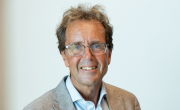
Robert Klijn Robert Klijn is the founder of Fair Impact, an independent consultancy firm serving pension funds, asset managers and research boutiques. He began his career in 2002 at ING Equity Markets as one of the first ESG specialists in the Netherlands and, through Fair Impact, has represented several leading ESG research firms. |
|
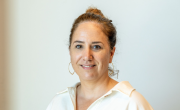
Marjolein Meulensteen Marjolein Meulensteen is Senior Adviser on Responsible Investment at a.s.r. Asset Management. In her role, she is responsible for developing strategy and policy on responsible investment, as well as policy on biodiversity and natural resources. She previously worked at a.s.r. as Sustainability Manager and as a Consultant on International Environmental Policy. |
|
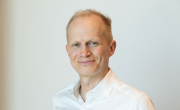
Nicholas Moss Nicholas Moss is Head of Nature-Based Solutions at Nuveen Natural Capital, where he is responsible for developing investment strategies and managing a portfolio in the fields of forestry, agriculture and ecological restoration. With over 15 years’ experience, his roles have included managing a fund focused on sustainable agriculture and forestry. He previously worked at Mirova Natural Capital and PwC. |
|
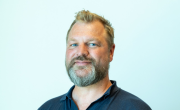
Karel Nierop Karel Nierop is Head of Products & Solutions at Triodos Investment Management. He is responsible for developing scalable impact investment strategies, including in the areas of biodiversity and natural capital. With over 20 years’ experience in banking and impact investing, 15 of which have been spent at Triodos, he combines his extensive investment expertise with a strong focus on the benefits that investments bring to nature and society. |
|
Maria Velkova Maria Velkova is Chief Investment Officer at Aqua-Spark, an Article 9 impact fund that allocates capital across the sustainable aquaculture value chain. She is responsible for managing and expanding the portfolio, which spans production (farming), alternative food ingredients, aqua technology and health solutions. |
Read the report in the digital magazine