
Swissquote: Chip carnage
By Ipek Ozkardeskaya, Senior Analyst, Swissquote
Global equity markets mostly welcomed the strong win by Democrats, with European and Chinese markets surfing on hopes that the Democratic shift in Congress could increase pressure to undo some tariffs and restore stronger trade ties with the US (although an improvement in trade relations remains a possibility rather than a certainty).
The equity rally also supported major US indices; technology, however, underperformed. The Dow Jones Industrial Average jumped 3%, the S&P 500 added 1.58%, while the Nasdaq 100 advanced 0.91% as hyperscalers gained on hopes that the new Congress would encourage them to slow their AI spending!
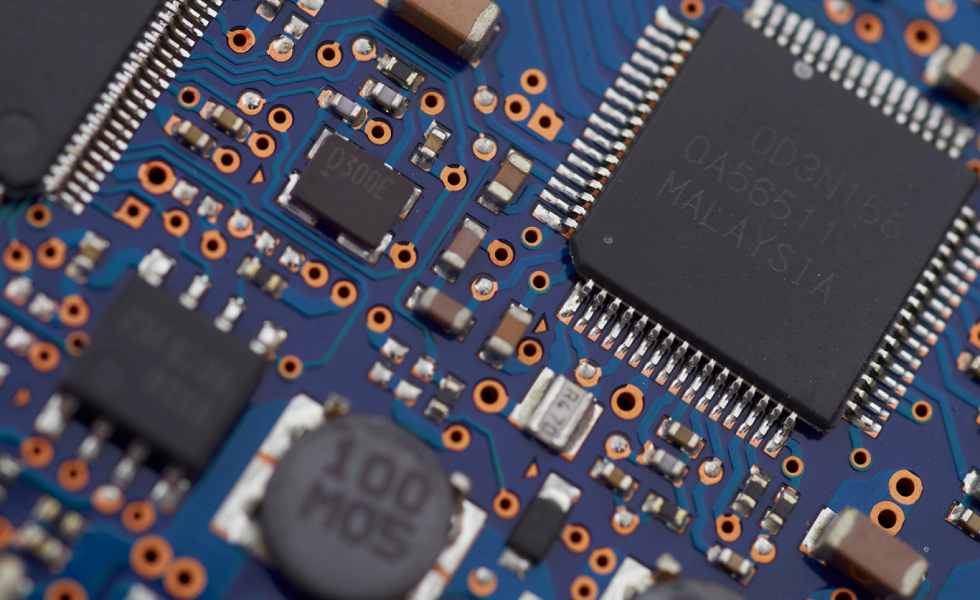
The same hope (of seeing slower AI spending) hit chip stocks. Philadelphia’s semiconductor index sank more than 3% and slipped below a critical Fibonacci level (the major 38.2% retracement of the 2025–2026 rally), potentially stepping into a medium-term bearish consolidation zone for a deeper retreat. AMD gained only 1% after strong results and an upbeat outlook.
Better than expected results from Qualcomm and Arm failed to bring buyers on board after the close; both stocks fell in after-hours trading. Kospi is down by 6% today. S&P and Nasdaq futures are in the negative .
Looking through the knee-jerk volatility, the outlook for hyperscalers may improve if they slow down spending without hurting growth from investments made so far, but the outlook for AI enablers and the broader AI complex has arguably become more challenging following the midterms.
The Democratic victory is expected to become a potential obstacle to an investment story already facing questions over massive spending, future returns and financing. Hyperscalers have been throwing hundreds of billions of dollars at AI infrastructure without yet convincing investors that future returns will justify the spending.
Rising debt and borrowing costs make that question harder to ignore. Not a day goes by without one of these companies seeking more financing through equity or bond issuance – both potentially negative for their valuations, although demand for freshly issued equities and bonds remains strong so far.
But then, there is the slowing earnings story:according to FactSet’s 3 November update, blended third-quarter earnings growth stood at 22.6% for the Magnificent Seven, compared with 32.6% for the other 493 S&P 500 companies.
At the end of September, expectations were almost the reverse: 33.6% for the seven giants versus 27.8% for the rest. If tech earnings grow more slowly than those of other companies, why would investors continue paying high valuations for technology stocks?
Investors are questioning how much of a valuation premium those leaders still deserve. Some caution is necessary: investment losses, litigation charges and comparisons with earlier investment gains partly explain the gap between the Mag 7 and the rest.
The figures do not entirely reflect weaker underlying operations. And the S&P 493 includes other technology companies, so this is evidence of earnings broadening beyond the Mag 7 rather than a clean divide between technology and everything else.
But still, the setup was already suitable for broader sector rotation from tech to non-tech. The Democratic sweep strengthened that case rather than creating an entirely new direction.
Zooming out and looking back, higher energy prices and tariffs were among the factors that encouraged investors to seek refuge in AI and technology stocks since the Iran war started. Technology shares—whose valuations are normally sensitive to interest rates because more of their expected earnings lie in the future—navigated the rise in yields exceptionally better than others as investors remained confident in AI’s exceptional growth potential. That confidence, that potential, becomes more vulnerable when earnings expectations weaken and the cash needed to sustain growth keeps increasing.
On the other hand, a Democratic victory could increase pressure for diplomacy in the Middle East and perhaps help bring energy prices lower. US crude lost around 8% to below $88 per barrel on that hope in the wake of the midterm elections. More good news: Democrats could also push to undo tariffs, although Trump’s veto power limits their ability to deliver a broad rollback.
Rotation: where to?
Any progress on either front could encourage investors to move capital towards businesses and geographies that have suffered from higher import and energy costs. Here, European stocks offer a clearer valuation argument, with the STOXX 600 P/E ratio around 14.6 times forecast earnings and the FTSE 100 at around 12 times, compared with roughly 18.7 times for the S&P 500 and 19.9 times for the US technology. On the earnings front, European stocks’ earnings growth rates were also comparable to those in the US in Q3 announcements so far!
But caution! That rotation doesn’t come risk-free. Higher yields remain an important threat for the entire equity complex, including tech and non-tech, US and non-US markets. Higher yields make bonds more competitive at multi-decade-high levels, increase refinancing costs and put pressure on all equity valuations. So the risk is that rotation changes market leadership without delivering a sustained, broad equity rally.
Outflows from technology could support indices with less technology exposure, but some capital could also move towards sovereign bonds. Investors do not have to replace every technology position they sell with another equity position, especially when the macroeconomic backdrop is not ideal.
The Reserve Bank of Australia (RBA) raised its cash rate by 25 basis points to 4.85% on Tuesday. The Bank of England’s (BoE) is expected to announce a 25bp hike later today. Other major central banks have either hiked rates or said they would tighten policy to fight inflation in the coming months.
Therefore, even if diplomacy and changes in trade policy eventually ease inflation, central banks will need evidence that those improvements are lasting before softening their stance.
My take is that the midterms strengthen the case for more selective and broader market leadership. They do not remove the constraints facing equities. The opportunity lies in finding businesses where earnings can improve and valuations leave room for disappointment—while recognising that bonds could capture part of the money leaving the AI trade.